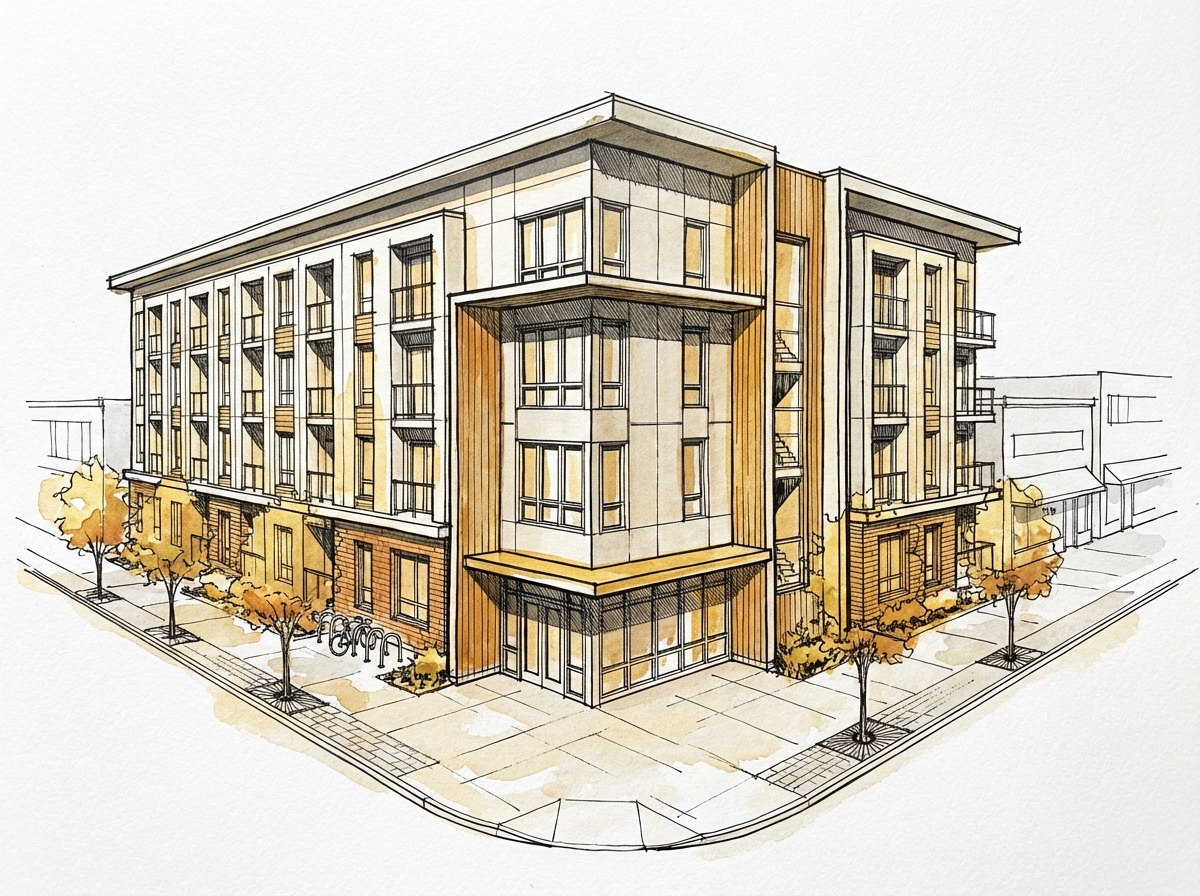
8-12 unit apartment buildings ideal for experienced developers seeking professional-grade rental income in Halifax's growing urban markets.
✓
Professional Management Economics
At 8+ units, professional property management becomes cost-effective, typically running 4-6% of gross rents compared to 8-10% for smaller buildings. This scale supports dedicated on-site or nearby maintenance staff and systematized operations.
✓
CMHC MLI Select Eligibility
Buildings of this scale qualify for CMHC's most favourable financing terms, including up to 95% LTC, 50-year amortization, and interest rate reductions for energy efficiency and affordability. These terms dramatically improve project economics.
✓
Diversified Income Stream
Multiple units provide significant income diversification. A single vacancy in a 10-unit building represents only 10% income reduction, compared to 25% in a fourplex or 50% in a duplex.
✓
Institutional Exit Options
Stabilized buildings at this scale attract institutional buyers and REITs, potentially providing cap rate compression upon sale. This creates multiple exit strategy options beyond individual investors.
✓
Operational Efficiencies
Shared building systems (HVAC, common areas, parking) create per-unit cost efficiencies. Interior corridor design reduces exterior maintenance and improves energy efficiency.
Things to Consider
Important factors before you build.
Higher Capital Requirements
Total project costs of $3-4.5M require substantial equity investment, typically $600K-$900K even with CMHC financing. This limits accessibility for many individual investors.
Extended Development Timeline
Larger buildings typically require 16-20 months from land acquisition to occupancy, including longer approval processes and construction periods. This extends capital commitment duration.
Elevator Requirements
Four-storey buildings typically require elevator installation, adding $150K-$200K to construction costs plus ongoing maintenance expenses. This threshold significantly impacts project economics.
Complex Approval Process
Buildings with 9+ units in ER-3 zones require Section 63 site plan approval, adding 3-6 months to approval timelines and requiring more detailed design development earlier in the process.
Professional Team Required
Projects of this scale require experienced architects, engineers, and general contractors. Finding and managing qualified professionals adds complexity compared to smaller projects.
Frequently Asked Questions
What is the minimum equity required for a small apartment building project?
Typical equity requirements range from $600,000 to $900,000 depending on total project cost and CMHC financing tier achieved. CMHC MLI Select can provide up to 95% loan-to-cost, meaning a $3.5M project might require as little as $175K in direct equity, but soft costs, land deposits, and construction draws typically require $600K+ in total available capital.
Do small apartment buildings require an elevator?
Nova Scotia Building Code requires elevators for buildings 4 storeys or higher. Three-storey buildings can avoid elevator costs entirely, while 4-storey buildings must include elevator installation ($150K-$200K) plus ongoing maintenance. This threshold significantly impacts project economics and should be carefully evaluated during design.
What is Section 63 approval and when is it required?
Section 63 of the Halifax Charter enables site plan approval for developments that exceed as-of-right permissions. In ER-3 zones, buildings with 9 or more units require Section 63 approval, which involves additional design review, public notification, and council approval. This process typically adds 3-6 months to the approval timeline compared to as-of-right development in HR-1 zones.
How does professional management work for small apartment buildings?
At 8+ units, professional property management becomes economically efficient, typically costing 4-6% of gross rental income. Management companies handle tenant screening, rent collection, maintenance coordination, and regulatory compliance. Some developers employ dedicated part-time building superintendents for buildings of this scale, combining professional management oversight with on-site presence.
What CMHC MLI Select benefits apply to small apartment buildings?
CMHC MLI Select offers significant advantages: up to 95% loan-to-cost ratio, 50-year amortization reducing monthly payments, and interest rate reductions up to 115 basis points for meeting affordability, accessibility, and energy efficiency criteria. Buildings meeting all criteria can achieve highly favourable financing terms that dramatically improve cash-on-cash returns.
Compare Building Types
Explore similar building types to find the right fit for your lot and budget.
Explore Small Apartment Building development opportunities across Nova Scotia. Each location page includes local rental data, zoning details, and a personalized feasibility snapshot.