Population Growth vs. Housing Supply in Nova Scotia: The Data Behind the Opportunity
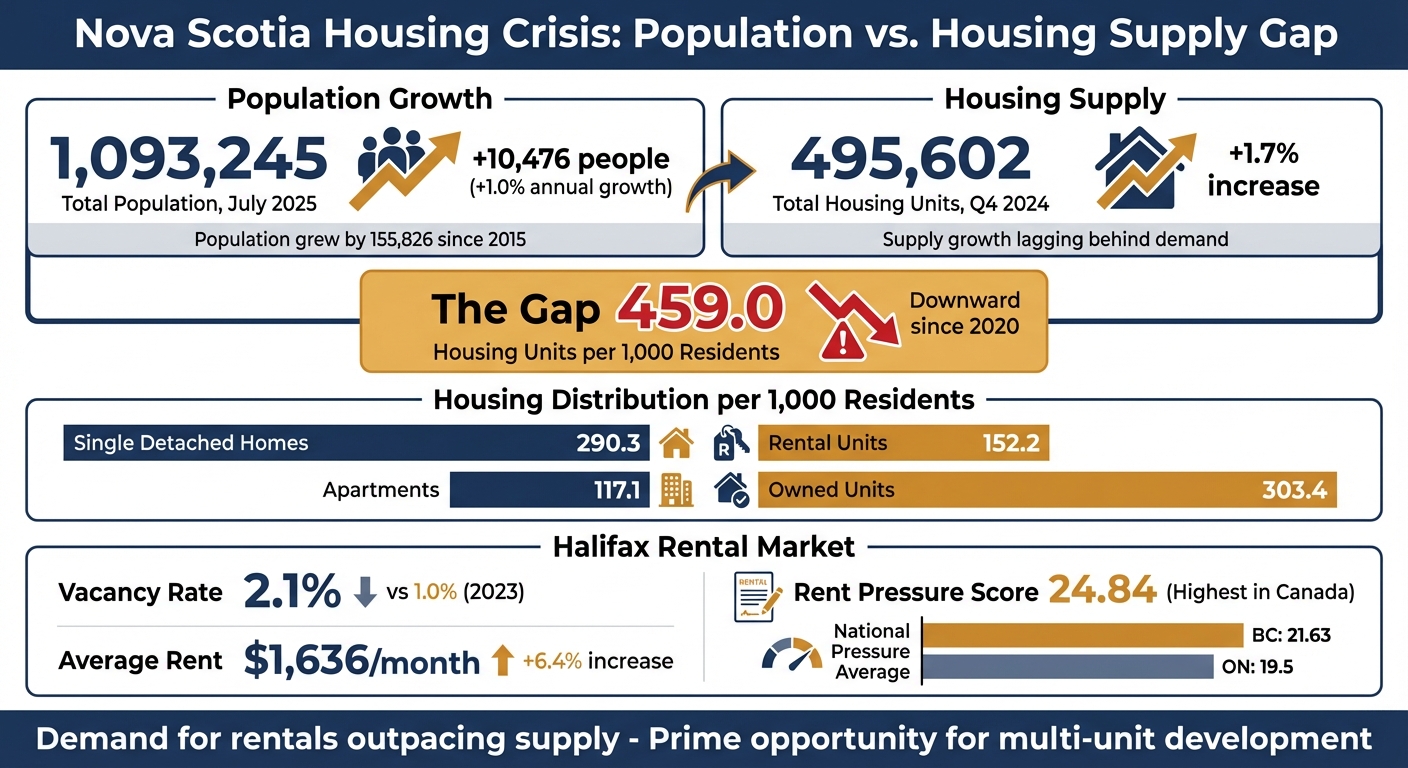
If you own property in Nova Scotia, you’ve likely noticed the growing tension between population growth and housing supply. Since 2015, the province’s population has grown by 155,826 people, hitting 1,093,245 by mid-2025. Yet housing stock has lagged far behind, with just a 1.7% increase in 2024. That leaves only 459 housing units per 1,000 residents - down year-over-year since 2020. For property owners, this means one thing: demand for rentals is outpacing supply, and the opportunity to build multi-unit rentals has never been clearer. This article breaks down the numbers and explains why now is the time to act.
Nova Scotia Housing Supply vs Population Growth Statistics 2024-2025
1. Nova Scotia's Population Growth Data
Population Growth Rate
From July 2024 to July 2025, Nova Scotia's population grew by 10,476 people, reaching 1,093,245 - a 1.0% increase, slightly ahead of the national growth rate of 0.9% [1]. However, this marks the smallest annual increase in six years.
This growth came entirely from migration. During the same period, deaths (11,262) outnumbered births (7,935), resulting in a natural population decline of 3,327 residents [1]. On the other hand, international immigration added 10,984 people, while interprovincial migration brought in another 3,226, making it the tenth consecutive year with a positive net gain from other provinces [1]. Ontario remains the largest contributor, with a net increase of 2,625 people moving to Nova Scotia, though this figure has slowed compared to previous years [1].
The province's ability to attract and retain newcomers is driving consistent demand for rental housing. As of July 2025, there were 59,197 non-permanent residents, most between 18 and 34 years old [1]. With a median age of 43.3 years, the demand for rental units - particularly multi-unit properties that cater to working-age households - remains strong. These demographic trends highlight the ongoing pressure on Nova Scotia's housing supply.
sbb-itb-16b8a48
2. Housing Supply Shortage: The Data
Housing Supply and Construction Trends
Nova Scotia's housing stock saw a modest increase of 1.7% in Q4 2024, reaching 495,602 units [3]. However, this growth isn't keeping pace with the province's population gains, leaving a supply gap that continues to widen. Currently, Nova Scotia has 459.0 housing units for every 1,000 residents - a ratio that has been on a downward trend since 2020, only stabilizing in 2024 [3].
The composition of the housing stock tells a clear story. There are 290.3 single detached homes per 1,000 residents compared to just 117.1 apartments [3]. This imbalance is even more apparent in the rental market, with only 152.2 rental units per 1,000 residents versus 303.4 owned units [3]. These figures underline a mismatch between supply and demand, particularly in the rental segment, which fuels intense competition for available units.
Rental Vacancy Rates
Halifax's rental market reflects the province's supply constraints. The vacancy rate in the city (including Dartmouth) edged up from 1.0% in 2023 to 2.1% in 2024, but this is still very low by any standard. At the same time, the average monthly rent climbed by 6.4%, rising from $1,537 to $1,636 [2]. Although rent increases have slowed compared to the 13.8% surge seen previously, the market remains tight [2]. Nova Scotia's "Rent Pressure" score - measuring tenant demand relative to supply - is the highest in Canada at 24.84, outpacing British Columbia's 21.63 and Ontario's 19.5 [2].
What this means for property owners: With a 2.1% vacancy rate, consistent rent increases, and the highest rent pressure in the country, the demand for rental housing remains strong. For property owners, this creates a prime opportunity to invest in multi-unit developments to meet the needs of a growing tenant base.
Is Halifax's rental market finally stabilizing?
Pros and Cons
Nova Scotia's housing market presents a mix of opportunities and challenges. The supply side is tight - growth was just 1.7% in Q4 2024, with only 117.1 apartment units available per 1,000 residents. This scarcity has intensified the rental market's pressure [3].
Rental costs have surged. Average annual rent growth jumped from 3.0% before 2019 to 7.8% between 2019 and 2024. Meanwhile, house prices climbed by 14.4% annually [4]. The affordability ratio for homebuyers nearly doubled, going from 26% in 2019 to 49% in 2024. These rising barriers to homeownership are keeping a significant number of Nova Scotians in the rental market [4].
Here’s a snapshot of the supply situation:
| Metric | Value |
|---|---|
| Apartment Units per 1,000 Residents | 117.1 [3] |
| Owned Units per 1,000 Residents | 303.4 [3] |
| Rental Units per 1,000 Residents | 152.2 [3] |
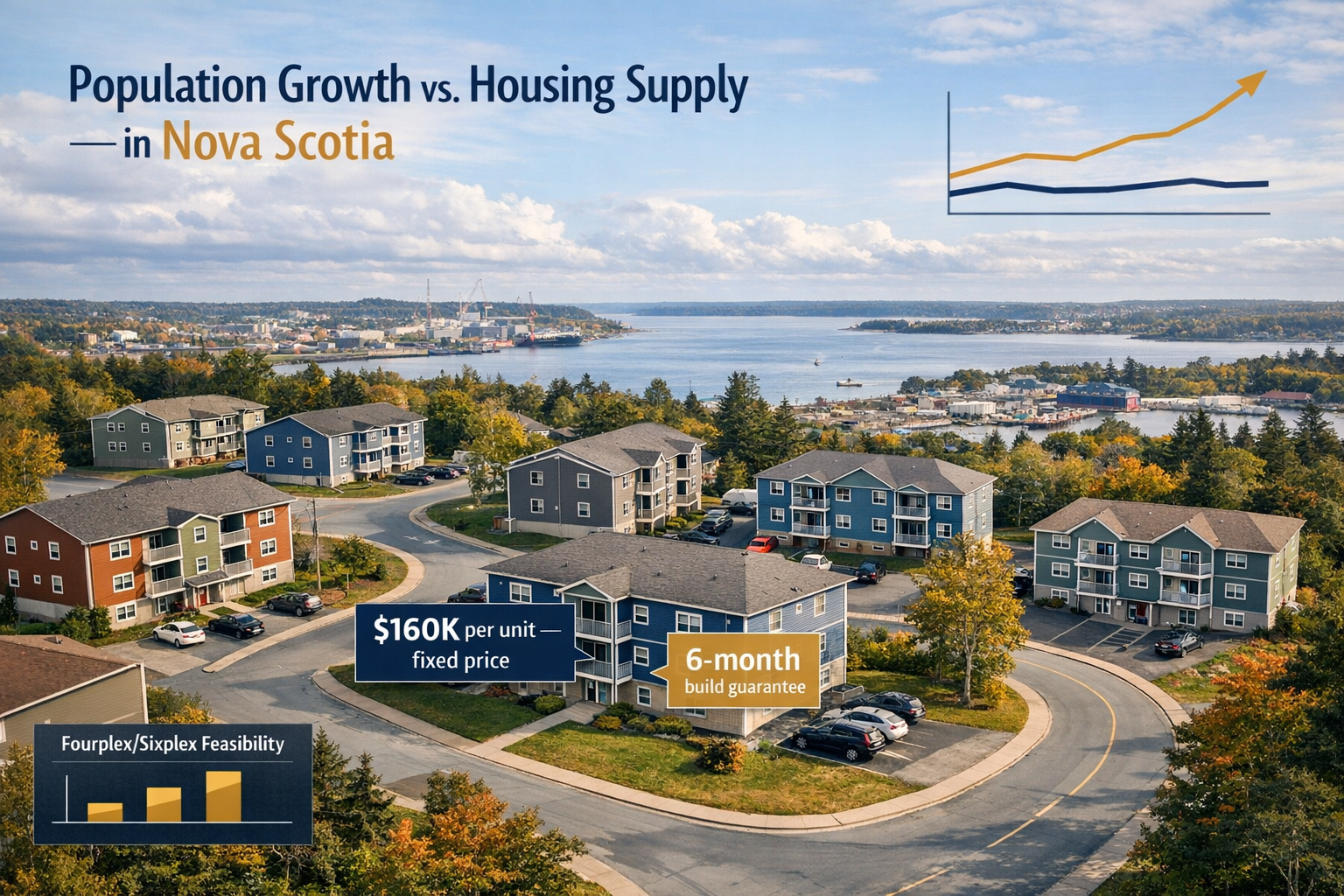
This imbalance highlights the potential for build-to-rent developments. Helio’s fixed-price, six-month construction model offers property owners a way to meet this growing demand quickly. With rents rising and supply constrained, acting fast on multi-unit projects can help owners tap into this demand while sidestepping the risks of escalating construction costs and regulatory delays.
Conclusion
Nova Scotia welcomed 19,237 new residents in 2023, marking a 4.1% annual population increase, while the housing stock lagged significantly, growing by just 1.7% in Q4 2024 [3]. This imbalance has left the province with only 459 units per 1,000 residents, creating intense demand for rental properties. For property owners, this growing gap signals a strong case for investing in multi-unit rental developments.
"When people can't buy, they stay in rentals longer, which slows market mobility and keeps demand high for rentals, especially for those more affordable units" [5].
Kelvin Ndoro, Lead Economist at CMHC, highlights how this trend has pushed vacancy rates for rentals under $1,300 per month below 1% [5]. This underscores the pressing need for property owners to step into the "missing middle" by developing fourplexes, sixplexes, and small apartment buildings to meet the demand for affordable rental units.
In Halifax, over 75% of new construction is already focused on rentals [5], proving the viability of the build-to-rent approach. For landowners, this is a chance to turn underutilized property into income-generating assets while addressing the housing shortage.
Helio’s fixed-price model - $160,000 per unit with a six-month build timeline - offers a clear path to entering the market quickly, avoiding the risk of rising costs or regulatory shifts. If you own land in Nova Scotia, a fourplex or sixplex could be the key to boosting your property’s value while contributing to much-needed housing supply. A free site evaluation can provide clarity on your land's potential, ensuring your project is both timely and financially rewarding.
FAQs
How do I know if my land can support a fourplex or sixplex?
To figure out if your property can accommodate a fourplex or sixplex, start by reviewing local zoning bylaws and land use regulations. These will tell you if multi-unit developments are allowed on your land. Next, evaluate the physical characteristics of your lot, such as its size, slope, and access to utilities. Make sure these align with requirements for setbacks, parking spaces, and infrastructure capacity. Lastly, reach out to local planning authorities for clarity on density limits and any specific development restrictions that may apply to your property.
What vacancy rate is considered “healthy” for rentals in Halifax?
In Halifax, a vacancy rate of around 3.1% is seen as a healthy benchmark for rental properties. This rate sits above the 10-year average, indicating a balanced rental market where supply aligns well with demand.
What returns should I expect from a small multi-unit rental in Nova Scotia?
Small multi-unit rentals in Nova Scotia are becoming a solid investment, thanks to a growing population and a tight housing market. With rents climbing - Halifax's average two-bedroom rent is projected to hit $1,707 in 2024 - rental properties offer strong income potential. While returns depend on the specific property and its location, annual cash-on-cash returns of 6–8% or more are realistic. This is largely due to the high demand for housing and the limited supply, particularly in urban centres like Halifax.