Rent Growth Trends by Nova Scotia Municipality: Where the Numbers Are Heading
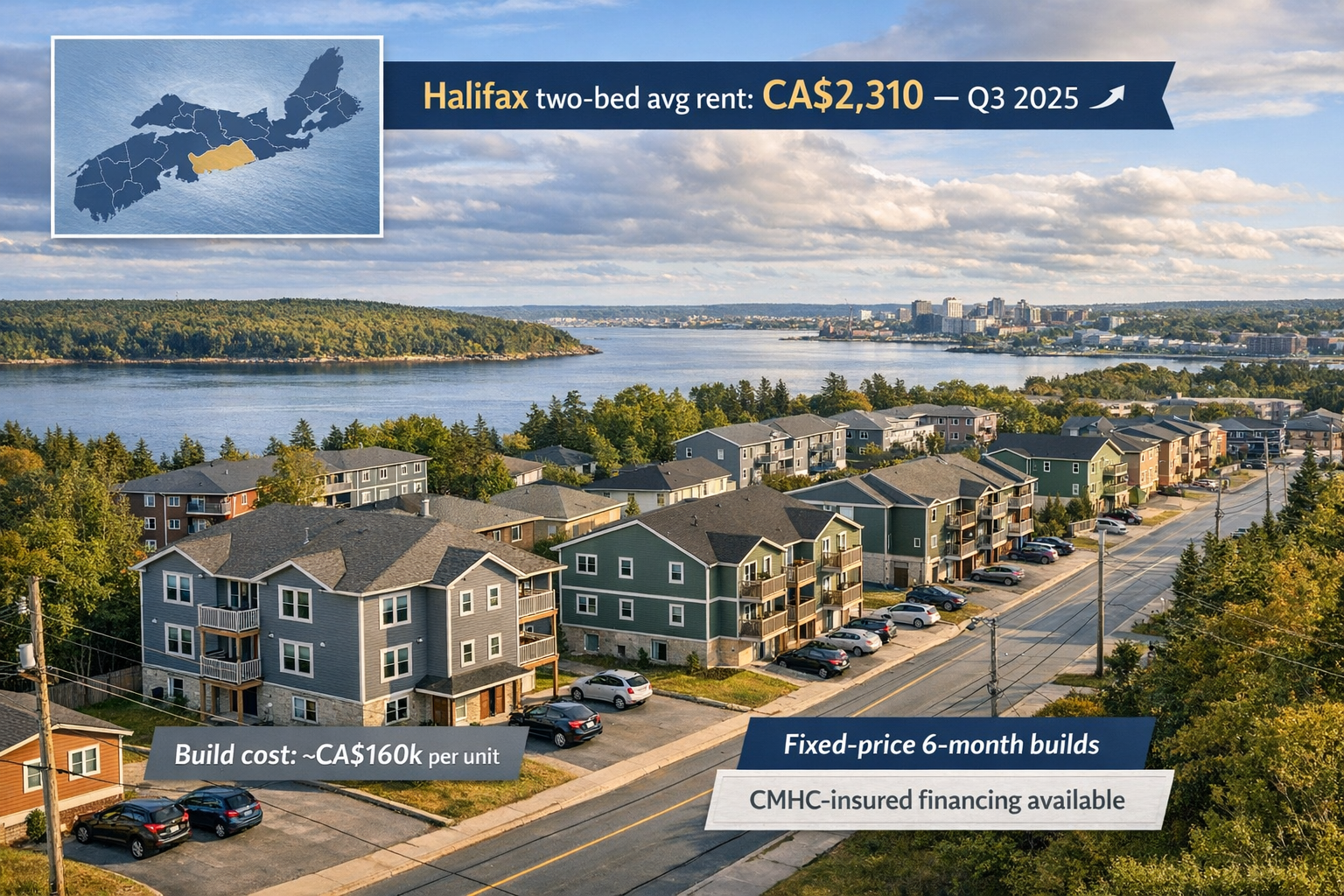
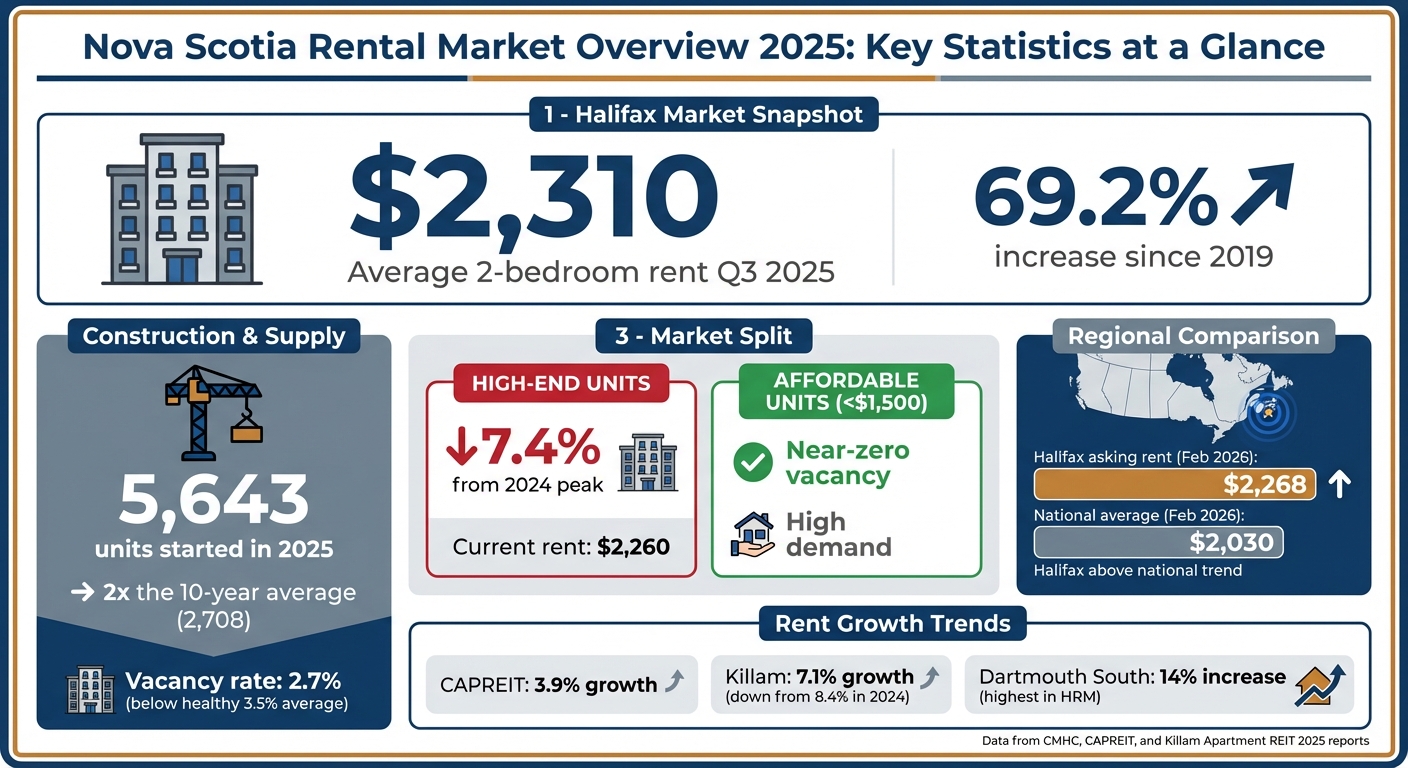
If you're a property owner in Nova Scotia, you're likely asking: where is rent growth heading, and how does it affect my bottom line? Here's the key number - Halifax's average rent for a two-bedroom apartment hit $2,310 by Q3 2025, a 69.2% jump since 2019. Construction in Halifax also surged, with 5,643 units started in 2025, more than double the 10-year average. But the market is splitting. High-end units are seeing rents drop 7.4% from their 2024 peak, while affordable rentals under $1,500 are in short supply, with near-zero vacancy rates. This article breaks down what these trends mean for your rental strategy and where the best opportunities lie. For those looking to capitalize on these trends, building a small multi-unit in Nova Scotia offers a clear path to increasing inventory in high-demand areas.
Nova Scotia Rental Market Statistics 2025: Halifax Rent Growth and Vacancy Rates
Province-Wide Rent Growth in Nova Scotia
Year-Over-Year Rent Growth and Vacancy Rates
Nova Scotia's rental market has slowed after several years of rapid increases. In 2025, rent growth was about half of what it was in 2024. For instance, CAPREIT reported a 3.9% increase in Halifax rents, while Killam's average rent growth dropped from 8.4% in 2024 to 7.1% in 2025 [3]. This marks a significant shift, as it's the first time since 2018 that Killam's annual rent growth in Halifax dipped compared to the previous year [3].
Halifax's vacancy rate rose to 2.7% in 2025. While this is higher than recent years, it remains below the long-term average of 3.5%. However, this overall rate hides a clear divide: newer, high-priced units are seeing more vacancies, while demand for units under $1,500 per month remains extremely strong [1][3][4]. As Kelvin Ndoro, Lead Economist at CMHC, explained:
Movement is how affordability spreads across the rental market. When people can move, units free up and prices adjust, and when they can't, pressure gets stuck at the bottom of the market [1].
For property owners, these shifts highlight the importance of prioritizing occupancy rates and balancing unit types rather than relying solely on higher rents from tenant turnover [3]. These local dynamics also set Nova Scotia apart from broader national trends.
How Nova Scotia Compares to Other Provinces
Nova Scotia's rental market continues to stand out from the rest of Canada. While the national average asking rent dropped to $2,030 in February 2026 - marking 17 straight months of decline - Halifax's average asking rent climbed to $2,268 during the same period [1]. This places Halifax well above the national average and higher than cities like Kingston ($2,254) and East York ($2,243) in Ontario [1].
Kelvin Ndoro pointed out the unique factors driving Halifax's market:
There is a difference between what's happening in Halifax versus the rest of the country... rents keep increasing at a much higher rate than you see across Canada [1].
This divergence is largely due to strong population growth among prime renting age groups, even as migration trends - both international and interprovincial - begin to slow [4]. For context, the average rent for a two-bedroom unit in Halifax was $1,707 in 2024, significantly higher than the national average of $1,447 [4].
sbb-itb-16b8a48
Rent Growth by Municipality
Halifax: Leading Rent Growth in the Province
Halifax remains the driving force behind Nova Scotia's rental market, though rent increases have slowed compared to prior years. By late 2025, CAPREIT reported an average rent of CA$1,713, reflecting a 3.9% year-over-year increase, while Killam Apartment REIT's portfolio averaged CA$1,593, showing a 7.1% growth rate. Notably, Killam's growth rate dropped from 8.4% in 2024 to 7.1% in 2025, marking the first decline since 2018 [5].
The market has split into two clear segments. On one hand, asking rents for newer, high-end units peaked in Q2 2024 but have since dropped 7.4%, landing at approximately CA$2,260 by the end of 2025. On the other hand, demand for affordable units priced under CA$1,500 remains intense, with near-zero vacancy rates. The mark-to-market spread for these units has narrowed from 25% at the end of 2024 to 15% in 2025 [5].
Neil Lovitt, a real estate consultant, summed it up:
We're seeing across both large landlords, as well as really landlords of all sizes, that the ability to push [market] rents higher ... is a lot more constrained now [5].
These dynamics are setting the tone for similar trends in neighbouring municipalities.
Dartmouth and Bedford: Growing Rental Demand
Dartmouth South experienced a 14% rent increase in 2025 [1][9], the highest growth rate within the Halifax Regional Municipality (HRM). Kelvin Ndoro, CMHC's Lead Economist, observed:
We're seeing higher rent increases in the most affordable parts of the city. For example, Dartmouth South had the highest rent increase at about 14 per cent [1][9].
Like Halifax, Dartmouth and Bedford are seeing changes in tenant demographics. Bedford, in particular, is attracting families looking for larger units and proximity to job hubs. Both areas benefit from their suburban appeal and lower average rents compared to downtown Halifax. For property owners, these suburban markets offer opportunities to develop multi-unit properties in the CA$1,200–CA$1,500 rental range, where vacancy remains exceptionally low.
Truro, Kentville, and Regional Markets
Outside the HRM, areas like Truro and Kentville present a different picture. While rent growth data for these regions is sparse, rental construction in Halifax dominates. In 2025, Halifax recorded 5,643 construction starts, more than double its 10-year average of 2,708 [9].
The affordability gap between Halifax and smaller centres is stark. For example, a one-bedroom unit in Amherst is capped at CA$548 for 2026 [7], compared to Halifax's average asking rent of CA$1,840 for the same unit type [2]. This gap highlights the importance of tailoring development strategies to the economic conditions of each region. Philip Fraser, CEO of Killam Apartment REIT, emphasized this nationwide trend:
The lower price point is what's being sought after right across the country [5].
For property owners eyeing regional developments, the challenge lies in balancing lower rents with the realities of smaller tenant pools.
What's Driving Rent Increases
Housing Supply vs. Rental Demand
In 2025, Halifax saw 5,643 new construction starts, more than double the 10-year average of 2,708. Despite this surge, the rental market remains tight and somewhat shielded from broader national trends. Notably, over 75% of these new builds focused on rental housing rather than homes for purchase, leaving fewer options for those looking to buy [1].
This has created a split in the rental market. At the higher end, new completions have eased some pressure, with asking rents for two-bedroom apartments dropping 7.4% from their Q2 2024 peak to about CA$2,260 by late 2025 [5]. On the other hand, affordable rentals remain under strain. While the overall vacancy rate in Halifax edged up to 2.7%, it’s still below the healthy long-term average of 3.5% [1].
The core issue is market immobility. When people can't transition into homeownership, they stay in rentals longer. This slows turnover and keeps demand high, especially for affordable units. As a result, available rentals rarely cycle out, keeping rents elevated. These supply issues are further compounded by demographic shifts, making population growth trends worth a closer look.
Population Growth and In-Migration Patterns
The 15–34 age group - prime rental candidates - grew 5.7% in 2024 but slowed to just 0.7% in 2025 [6]. Federal policies reducing the influx of non-permanent residents, such as international students and temporary workers, cut into rental demand in late 2025.
Even with this shift, demand for affordable rentals remains strong. Philip Fraser, CEO of Killam Apartment REIT, highlighted this trend:
the lower price point is what's being sought after right across the country [5].
These shifts in population and demand tie directly to how government policies are influencing the rental market.
Economic Factors and Government Policy
Nova Scotia's 5% annual rent cap, extended through December 2027, aims to protect tenants but has unintended consequences. It discourages renters from moving, as they often face higher rents when relocating [1].
Landlords frequently adjust rents to the cap limit on occupied units and raise prices significantly when tenants leave. For example, Dartmouth South experienced a 14% rent increase in 2025, with 40% of the rise in average two-bedroom rents linked to tenant turnover [6]. Meanwhile, high construction costs and rising interest rates have limited new supply, though government-backed lending helped keep rental completions above historical averages in 2025 [6].
What this means for property owners: While the rental market shows signs of rebalancing, the shortage of affordable units remains a critical issue. Developing moderately priced properties, particularly in suburban areas like Dartmouth and Bedford, presents a strong opportunity to meet ongoing demand. Being aware of these policy and market dynamics can help property owners make smarter decisions in a shifting landscape.
Is Halifax's rental market finally stabilizing?
What This Means for Multi-Unit Rental Development
Multi-unit rental development strategies need to align with shifting market trends, particularly as municipal rent patterns evolve.
Where to Build: High-Demand Municipalities
The data highlights key areas for development. Dartmouth South is leading the Halifax region, with projected rent growth of about 14% in 2025 - the highest in the metro area [9]. While Halifax proper remains the largest rental market, suburban areas like Dartmouth and Bedford are showing stronger returns, driven by a lack of affordable units.
Luxury rentals in Halifax are seeing declining demand, with rents dropping 7.4% to CA$2,260. Meanwhile, affordable units priced under CA$1,500 remain fully occupied [3][8].
For the best results, focus on projects in the CA$1,200–CA$1,600 range in Dartmouth and Bedford. These areas offer rapid absorption rates and minimal vacancies, alongside less competition in the affordable segment. Secondary markets like Truro and Kentville also present opportunities, given their increasing rental demand and limited activity from large institutional landlords [10].
Construction Costs and Financing Options
Developing multi-unit rentals in Nova Scotia typically costs around CA$160,000 per unit, with a range of CA$140,000 to CA$210,000 for a standard two-bedroom unit [10]. On top of that, municipal permit fees can add CA$2,000 to CA$8,000, depending on the project's size and location.
The CMHC MLI Select program remains a strong financing option for projects with five or more units. It offers up to 95% loan-to-cost financing and amortization periods of up to 50 years, particularly for energy-efficient builds [10]. For example, with this program, property owners could start a fourplex project with as little as CA$30,000 to CA$40,000 down. Given that Halifax's average asking rent for two-bedroom units was CA$2,310 in Q3 2025 [2], these financing terms align well with the revenue potential, even with the provincial 5% annual rent cap in place until December 2027 [9].
Project Timing Considerations
Rob Lough, Broker/Owner at Century 21 Optimum Realty, observes:
What we're seeing is a market shifting from emergency mode toward something closer to functional [3].
Additionally, the "mark-to-market spread" - the gap between current rents and market rates for vacant units - has narrowed. For Killam Apartment REIT, this spread dropped from 25% at the end of 2024 to 15% by the end of 2025 [5]. This means landlords have less flexibility to raise rents significantly during tenant turnover.
For developers, this shift suggests longer absorption timelines for high-end projects compared to 2022–2023, as tenants now have more choices [3]. However, affordable projects in the CA$1,200 to CA$1,600 range should lease up quickly, as demand for these units remains strong [5]. Fixed-price, rapid-build models with six-month construction timelines are becoming increasingly popular. These models help mitigate high interest rates and reduce carrying costs [10]. Timing, combined with careful attention to costs and market segmentation, will be critical for the success of multi-unit developments in Nova Scotia's changing rental market.
Summary and Next Steps
Nova Scotia's rental market is adjusting after a period of rapid growth. Despite this, demand remains solid in specific segments and municipalities. In Halifax, the vacancy rate sits at 2.7%, with 5,643 construction starts - more than double the 10-year average. The market is split: the high-end segment sees two-bedroom rents drop 7.4% to CA$2,260 [5], while affordable units, priced under CA$1,500, face near-zero vacancies [3][5]. This divide highlights where development efforts should focus.
Neighbourhoods like Dartmouth and Bedford are performing well, with Dartmouth South showing a 14% rent increase projected for 2025 [1]. Secondary markets such as Truro and Kentville also present growth opportunities.
The current environment supports new development. CMHC's MLI Select program offers financing of up to 95% of loan-to-cost, and construction costs average around CA$160,000 per unit. This means a fourplex project could require just CA$30,000 to CA$40,000 as a down payment. Additionally, the province's 5% rent cap remains in place until December 2027 [1]. Kelvin Ndoro, Lead Economist at CMHC, puts it succinctly:
When people can't buy, they stay in rentals longer, which slows market mobility and keeps demand high for rentals, especially for those more affordable units [1].
These factors underscore the strong potential for multi-unit rental developments in high-demand areas, particularly suburban markets. The opportunity for affordable multi-unit construction is still strong. Fixed-price construction contracts with six-month timelines help mitigate interest rate risks while addressing the ongoing demand for rentals. The key is targeting the right price points, municipalities, and construction strategies.
FAQs
Will Halifax rents keep rising in 2026–2027?
Halifax rents are projected to keep climbing in 2026–2027, albeit at a slower rate compared to previous years. While reports suggest a cooling trend in 2026 following years of sharp increases, affordability remains a pressing issue, particularly for lower-priced rental units.
Where should I build to target rents under $1,500?
If you're aiming for rents under $1,500 in Nova Scotia, Dartmouth could be worth exploring. While the average rent for a two-bedroom unit generally falls between $1,950 and $2,100 per month, you can hit lower price points by focusing on smaller units or properties in less central areas. Keep in mind that rental prices fluctuate based on neighbourhoods and specific property features, so planning with these factors in mind is crucial.
How does the 5% rent cap affect my return?
A 5% rent cap means landlords can only raise rents by up to 5% annually. While this provides predictability for tenants, it can limit the growth of your rental income. Over time, this restriction can reduce your overall return on investment, especially if operating costs like property taxes, maintenance, or utilities increase faster than the cap allows. Knowing these constraints is critical when planning your long-term rental property strategy.