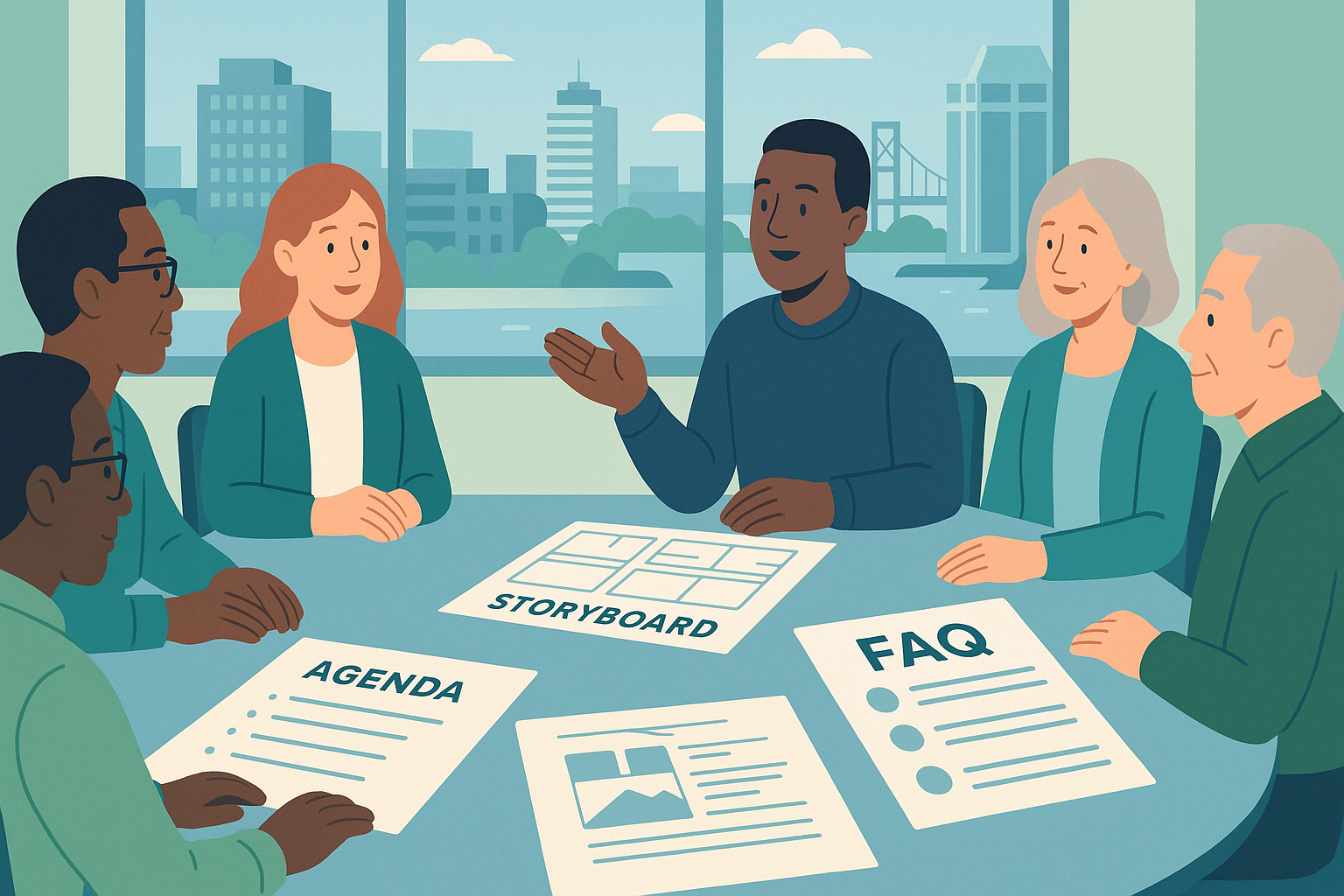
How to Prepare for Public Information Sessions in Halifax: Agenda, Storyboards, and FAQs
Public information sessions in Halifax are a required part of the approval process for multi-unit development projects. These sessions allow developers to present their plans, address community concerns, and gather feedback. Success depends on three key elements:
- Structured Agenda: Include an open house, formal presentation, and Q&A period to keep the session organized and productive.
- Engaging Storyboards: Use visuals like 3D renderings, site maps, and timelines to explain your project clearly and make it relatable.
- Detailed FAQs: Prepare answers to common concerns such as traffic, parking, and neighbourhood impact.
Tailor your approach to Halifax's local priorities, such as affordability, infrastructure, and preserving community character. Thoughtful preparation builds trust and encourages meaningful dialogue with residents and officials.
Case 21875 - Development of the former NS Home for Coloured Children (NSHCC)- Virtual Public Meeting
What Are Public Information Sessions in Halifax
Public information sessions in Halifax are formal gatherings where property owners present plans for multi-unit development projects to local residents and municipal officials. These meetings are a mandatory part of the municipal review process, ensuring openness and providing a platform for community input before any decisions are made about the project.
At these sessions, you'll share the details of your proposed development with community members, local leaders, and municipal representatives. The format encourages open dialogue, allowing attendees to ask questions, express concerns, and provide feedback. Being well-prepared and understanding the session's structure and requirements can significantly impact how your project is received.
Purpose and Requirements
The Halifax Regional Municipality mandates public information sessions for most multi-unit residential projects as part of its approach to community involvement.
As a property owner or applicant, you’re expected to present your proposal and answer questions from both the Council and community members [1][2][4]. Municipal staff support these sessions by explaining the process, outlining the proposal's context, and assessing how it aligns with municipal policies or by-laws [1][2][4]. They also provide clarity on how the project fits within Halifax's broader planning goals.
Members of the Regional Council or Community Council attend these sessions to hear residents' concerns and ask questions themselves. These officials are required to follow a strict Code of Conduct during their participation [1][2][3].
Typically, these meetings take place after your development application is submitted but before any final decisions are made. This timing allows you to incorporate community feedback into your project plans while maintaining flexibility. Knowing the session protocols will help you set clear objectives for engaging with the community.
Main Goals of Public Sessions
Public information sessions aim to create a shared understanding between property developers and the community. Transparency is a priority - you need to communicate your project's scope, timeline, and potential impact on the neighbourhood openly.
Proactively addressing concerns can help reduce opposition later. Common questions from Halifax residents often revolve around topics like parking availability, traffic congestion, building size, construction noise, and the strain on local infrastructure such as schools and transit systems.
Showing how your project will benefit the community - whether by providing much-needed rental housing or revitalizing underused spaces - can help build goodwill. If residents see you as a developer who listens and responds to their concerns, they’re more likely to support both your current and future endeavours.
These sessions also give you the chance to gain valuable local insights. Residents may share information about traffic patterns, infrastructure challenges, or specific neighbourhood priorities that can help you refine your project. Keeping these goals in mind as you plan your presentation and visual aids will ensure your message addresses the community’s most pressing concerns.
How to Create a Clear Agenda
A well-structured agenda is essential for keeping public information sessions focused and productive. It provides attendees with a clear understanding of the session's purpose and flow, ensuring that key topics are addressed efficiently. To create an effective agenda, allocate time thoughtfully and organize the session in a logical sequence. Each segment should serve a specific purpose, with enough time to encourage meaningful participation. A clear agenda not only guides the session but also helps build trust and fosters open communication within the community.
Required Agenda Parts
To ensure a successful session, include three crucial components in your agenda. These elements work together to create an engaging and informative experience for attendees.
- Open House Period: Start the session with an informal open house, lasting 60 to 90 minutes. This allows residents to review materials at their own pace and interact directly with your team. It's a great opportunity to address initial questions or concerns before moving into the formal presentation.
- Formal Presentation: Dedicate 30 minutes to a structured presentation. This segment should cover the project's scope, design features, construction timeline, and the expected benefits for the community.
- Question and Answer Period: Reserve 60 minutes for a Q&A session. This is a critical time for addressing residents' concerns and fostering meaningful dialogue about potential impacts on their neighbourhood.
These components ensure that community concerns are acknowledged while clearly communicating the benefits of your project.
Sample Agenda Layout
The Halifax Regional Municipality has demonstrated an effective approach to structuring public engagement events, offering a useful template for anyone planning similar sessions. For instance, during the August 2024 public engagement for Case 21402 – Sackville and Little Sackville Rivers Mapping Updates, they employed a dual-session format to maximize participation [5][4].
Afternoon Session Structure:
- 1:00 p.m. – 2:29 p.m.: Open House (1 hour 29 minutes)
- 2:30 p.m. – 3:00 p.m.: Formal Presentation (30 minutes)
- 3:01 p.m. – 4:00 p.m.: Questions and Answers (59 minutes)
Evening Session Structure:
- 6:00 p.m. – 6:59 p.m.: Open House (59 minutes)
- 7:00 p.m. – 7:30 p.m.: Formal Presentation (30 minutes)
- 7:31 p.m. – 8:30 p.m.: Questions and Answers (59 minutes)
This dual-session format offered flexibility for attendees, ensuring broader community participation. For single-session events, consider a 90-minute open house, a 30-minute presentation, and a 90-minute Q&A session. This 3.5-hour structure provides ample time for stakeholder engagement while maintaining a clear and organized flow. A well-planned agenda creates the foundation for engaging presentations and meaningful discussions.
sbb-itb-16b8a48
How to Make Effective Storyboards for Public Presentations
Storyboards simplify complex multi-unit development plans, making them accessible to community members. Unlike traditional architectural drawings, which can be hard to interpret, storyboards serve as a visual bridge, helping residents see how a proposed development will look, function, and fit into their neighbourhood. This approach not only conveys technical details but also highlights community benefits, fostering productive discussions during public sessions. When paired with a structured agenda and FAQ, storyboards can significantly enhance community engagement.
Key Parts of a Good Storyboard
To create a complete and effective storyboard for multi-unit development projects, several key components are essential. Each one helps communicate different aspects of the proposal in a way that’s easy to understand.
Site Context and Location Maps are the foundation of any storyboard. Start with an aerial view that shows how the property connects to nearby streets, parks, schools, and transit stops. Adding a detailed site plan with building placement, parking areas, landscaping, and pedestrian pathways helps residents visualize how the development fits into their neighbourhood.
3D Renderings and Architectural Visualizations bring the project to life. Use multiple angles, including street-level views, to show how pedestrians will experience the space. If landscaping is a major feature, include seasonal variations to showcase its year-round impact. For example, the Halifax Forum Redevelopment Project used artistic renderings to illustrate the transformation of a historic building, helping the public see how its character would be preserved [6].
Construction Timeline and Phasing Diagrams address common concerns about disruption. Visual timelines can show the sequence of construction phases, estimated durations, and major milestones. Include details on traffic management, noise reduction strategies, and scheduling plans to minimize the impact on the neighbourhood.
Environmental and Community Impact Visuals highlight the positive contributions of your project. These might include stormwater management features, eco-friendly building elements, bike storage facilities, or upgrades to public spaces. Before-and-after comparisons can be particularly effective in showing how the development improves the streetscape or addresses existing challenges.
Design Tips for Clear and Easy-to-Read Storyboards
To ensure your storyboards communicate effectively with a broad audience, focus on clarity and accessibility. The goal is to make sure everyone, regardless of their familiarity with construction or planning, can grasp the key points of your project.
Use Consistent Visual Hierarchy to guide viewers through the information. Larger text should be reserved for main headings, medium-sized text for key points, and smaller text for detailed information. Consistent colour coding across all boards - such as using the same colour to represent the building in site plans, renderings, and timelines - helps viewers quickly connect related details.
Prioritize Readability and Accessibility by selecting high-contrast colours and easy-to-read fonts. Community members will view your storyboards from varying distances, so use sans-serif fonts no smaller than 14 points for body text and 24 points for headings. Avoid relying solely on colour to convey information; include symbols, patterns, or text labels to ensure clarity.
Include Scale References and Familiar Elements to make the size and scope of the development relatable. Add people, vehicles, and nearby structures to your renderings to provide context. When discussing building heights, compare them to familiar neighbourhood landmarks instead of just stating measurements. For instance, saying "similar in height to the apartment building at [nearby address]" is more relatable than simply stating "15 metres tall."
Organize Information Flow Strategically by presenting the storyboards in a logical sequence, starting with neighbourhood context and moving into project specifics. Clearly number the boards and use arrows or other visual cues to guide viewers through the sequence. This method was effectively used in the Halifax Regional Municipality’s May 2024 Cogswell Interchange presentation, where structured visuals helped explain a complex urban transformation project [5][4].
Incorporate Interactive Elements to boost engagement during open house events. QR codes linking to additional information, comparison charts of design options, or overlay sheets showing seasonal changes can make the experience more dynamic. These interactive features turn passive viewing into active exploration, helping residents better understand and retain the project’s key aspects. Clear and engaging storyboards demonstrate a commitment to transparency and collaboration with the community.
Halifax-Specific Tips for Community Engagement
Halifax is a city of diverse neighbourhoods, each with its own character and needs. To ensure public engagement is meaningful, the city's 2024 Community Engagement Strategy stresses the importance of inclusivity and accessibility. This means moving away from generic approaches and focusing on methods that address the unique requirements of Halifax's communities.
Local Engagement Methods
To connect with all members of the community, it's essential to use a mix of approaches. For residents who aren't fluent in English, provide interpretation services and translated materials. Collaborating with local settlement agencies can help reach new Canadians and underrepresented groups. Choose venues that are accessible and welcoming, ensuring everyone feels comfortable participating.
In addition to in-person sessions, digital tools can expand your reach. Use project websites, social media platforms, and virtual office hours to engage those who may have limited availability or mobility. Scheduling events at varying times can also accommodate residents who rely on different transit options or have unique schedules.
How to Handle Common Community Concerns
Community discussions in Halifax often bring up concerns about multi-unit developments. To address these effectively, prepare clear, fact-based responses that align with regional planning priorities. Being transparent and tying your answers to shared community goals can turn potentially tense conversations into chances for collaboration. This approach reflects the values outlined in the Regional Municipal Planning Strategy, which aims to foster healthy, inclusive, and resilient communities [7].
Building Trust Through Proper Preparation
Thorough preparation is the backbone of successful public sessions. When property owners put effort into crafting detailed agendas, creating engaging visual materials, and planning thoughtful ways to involve the community, it sends a message of respect and transparency. These steps lay the groundwork for earning trust and fostering productive dialogue.
A well-organized agenda is the cornerstone of any effective session. By publishing agendas online by the Friday before the meeting, participants have time to prepare and know what to expect [2][8]. This structure typically includes staff and applicant presentations, opportunities for public input, and designated response periods [2]. Such orderly planning not only sets clear expectations but also reinforces the importance of earlier-discussed tools like storyboards and engagement strategies.
Storyboards play a crucial role in turning abstract ideas into something tangible and easy to understand. A great example is the Eastern Shore Lifestyle Centre (ESLC) project, which used concept boards featuring landscape drawings, aerial perspectives, detailed floor plans, and main entry designs. These materials were specifically created to “reflect the ideas shared during the public engagement sessions in October 2024 and provide a vision for this future community space” [9].
"These materials were specifically designed to reflect the ideas shared during the public engagement sessions in October 2024 and provide a vision for this future community space" [9].
Consistent and responsive engagement is another key ingredient in building credibility. For instance, the ESLC project was shaped by community consultations held in the spring and fall of 2024 [9]. This level of involvement shows a genuine commitment to incorporating public input, which strengthens trust.
Addressing both logistical and emotional concerns is equally important. Clearly communicating whether sessions are virtual or in-person, outlining comment deadlines, and explaining speaker registration procedures ensures clarity and avoids confusion [2][4]. On top of that, preparing fact-based responses to common concerns - such as traffic, density, or neighbourhood character - shows respect for the community’s legitimate interests and demonstrates a willingness to engage meaningfully.
FAQs
How can property owners and developers address community concerns during public information sessions in Halifax?
To connect with the community during public information sessions, it’s essential to focus on clear communication and meaningful engagement. Start by crafting an engagement plan that reflects the specific needs of the community. Consider factors like demographics, accessibility challenges, or language barriers that might affect participation. Keeping everyone informed is just as important - share regular updates, explain how feedback will shape decisions, and offer chances for people to stay involved throughout the process.
When collecting feedback, summarize it in concise, easy-to-understand reports. This shows residents that their voices are heard and their input matters. Building trust through open conversations and a sincere effort to address concerns can strengthen relationships and encourage community support for your project.
How can storyboards help communicate project details and engage the community during public information sessions?
Storyboards are an effective way to visually communicate project details in a clear and straightforward manner. They break down complicated information, making it easier for everyone to grasp, and can showcase essential elements such as timelines, design features, and potential impacts.
Incorporating visuals like diagrams, maps, and renderings, storyboards encourage active participation and promote openness. This method helps establish trust with the community by addressing concerns head-on and showing a genuine effort to maintain transparent communication.
What should property owners and developers in Halifax consider for effective public engagement?
If you're a property owner or developer in Halifax, understanding how public hearings work is key to engaging with the community. These hearings provide a platform for residents to share their thoughts on planning and development projects, making them an essential part of the process.
Public hearings are announced at least 7 days in advance, giving details such as the date, time, and deadlines for submitting comments or registering to speak. This advance notice ensures everyone has the opportunity to participate.
If you want to speak at an in-person public hearing, there are three ways to register:
- By contacting the Clerk’s Office before 4:30 p.m. on the day of the hearing.
- Signing up in person before the hearing begins.
- Adding your name during the meeting once all registered speakers have finished.
Being familiar with these steps and coming prepared can go a long way in building trust with the community and ensuring a more seamless engagement process.