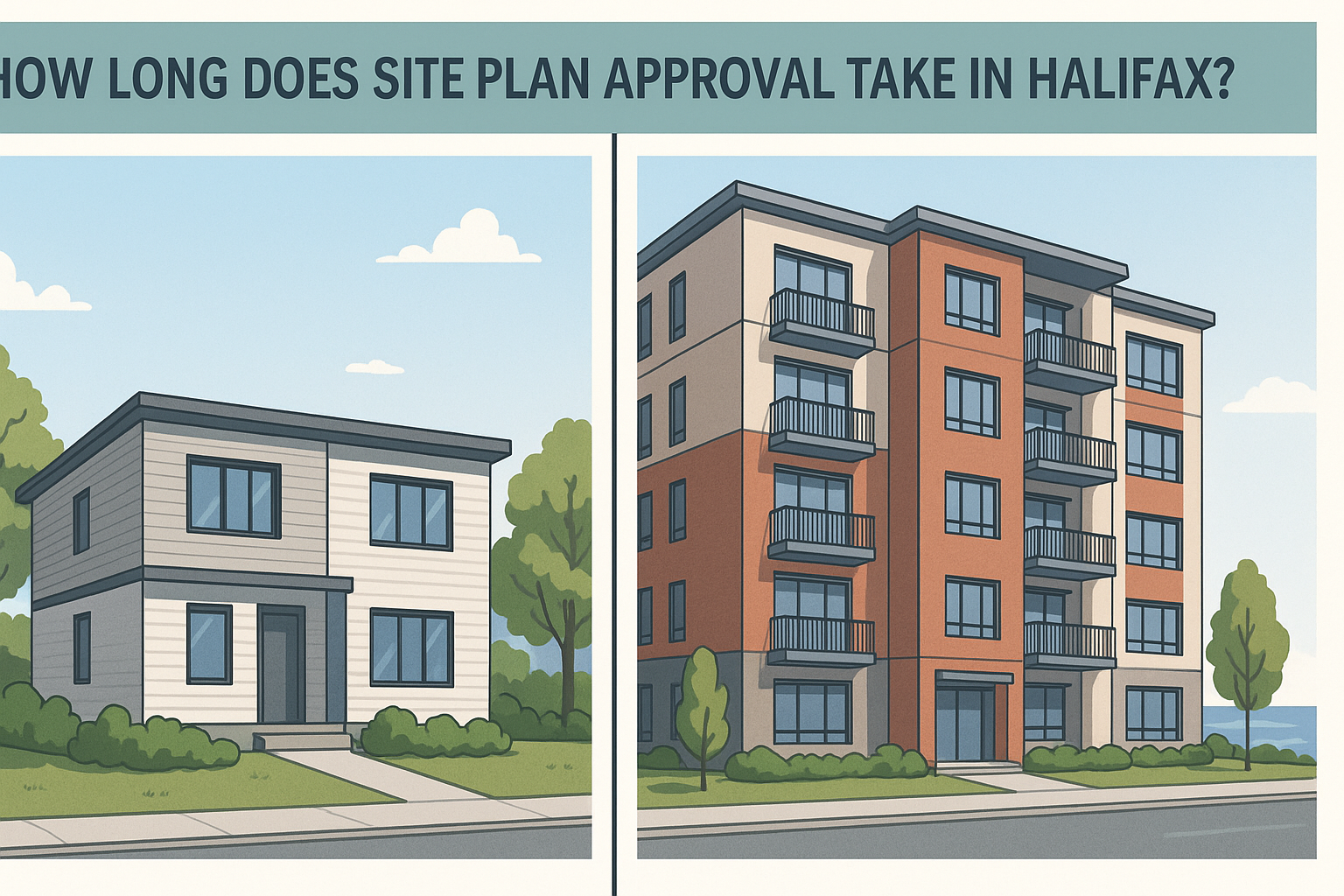
How Long Does Site Plan Approval Take in Halifax? Typical Timelines by Project Size
In Halifax, the time it takes to get site plan approval for multi-unit residential projects depends on the size and complexity of the development. Here's a quick breakdown of typical timelines:
- Fourplexes (4 units): 6–9 months
- Small multi-unit projects (5–12 units): 8–12 months
- Mid-size multi-unit projects (13–24 units): 10–14 months
Factors like public consultations, heritage reviews, application quality, and municipal workload can impact these timelines. Submitting a complete application and engaging with the community early can help avoid delays. After securing approval, choosing an integrated construction approach can save time and money during the building phase.
2. Introduction to Permitting, Planning, Licensing & Compliance - Customer Website
Site Plan Approval Timelines by Project Size
In Halifax, the time it takes to secure site plan approval varies based on the size of the project. Here's what you can typically expect for multi-unit developments:
Fourplexes (4 Units): About 6–9 Months
Fourplex projects generally move faster because they have a smaller impact on the surrounding neighbourhood. The process includes steps like initial consultations, ensuring compliance with regulations, and resolving any conditions. This usually wraps up within 6–9 months.
Small Multi-Unit Projects (5–12 Units): About 8–12 Months
For developments with 5 to 12 units, the approval process takes longer due to additional design and technical reviews. These reviews often focus on traffic considerations, utility capacity, and how well the project fits into the neighbourhood, extending the timeline to 8–12 months.
Mid-Size Multi-Unit Projects (13–24 Units): About 10–14 Months
Mid-size projects require more detailed scrutiny. This includes thorough public consultations and assessments of infrastructure and environmental factors. As a result, approvals for these projects typically take 10–14 months.
Keep in mind, these timelines can vary depending on the specifics of the project, the quality of your application, and the current workload of the municipal office. Careful preparation and identifying potential issues early can help keep the process on track.
Next, we’ll look at the main factors that influence these timelines.
Factors That Affect Approval Timelines
Several elements influence site plan approval timelines in Halifax, beyond just the size of a project.
Project Complexity and Size
The more intricate a project, the longer the review process tends to take. Projects with non-standard designs or those requiring additional environmental or engineering assessments often need more time for thorough evaluation.
Public Consultation and Heritage Reviews
Public consultation is a mandatory part of the process and involves measures like signage, online postings, mailouts, and community meetings. These steps can add to the overall timeline.
Heritage reviews bring additional layers of scrutiny. If your development site includes or is near a registered heritage property, or falls within a Heritage Conservation District, you’ll need to complete a Heritage Impact Assessment (HIA) [1]. Redevelopments involving heritage properties demand extra documentation, such as detailed site plans, elevation drawings, and planning rationale letters. These projects may also require additional committee reviews, which can further extend the process. Given the mix of community interest and project complexity, while most planning applications take about 10–12 months [1], more intricate or controversial projects often require even more time.
Application Quality and Municipal Workload
Submitting a complete, high-quality application can significantly speed up the process. On the other hand, incomplete or deficient applications lead to delays.
Municipal workload and staffing levels also play a role. Halifax has made major strides in recent years to improve processing times. For example, the average timeline for development application approvals dropped from 20.8 months in 2022 to just 9.8 months in 2024. This 11-month reduction marks the largest year-over-year improvement among the municipalities studied [2]. Being aware of these factors can help you better navigate the approval process.
sbb-itb-16b8a48
How to Navigate Halifax Site Plan Approval
Getting through Halifax's site plan approval process smoothly starts with submitting a complete, well-prepared application and staying in close communication throughout the review.
Application Process Steps
Kick things off with a pre-application consultation. This is your chance to clarify zoning requirements and flag potential challenges early. Reach out to Halifax Regional Municipality's planning department to discuss your project idea and identify any hurdles ahead of time.
When you're ready to submit your formal application, make sure it includes:
- Detailed site plans: Covering building layout, parking, landscaping, and stormwater management.
- Engineering drawings: For utilities and infrastructure.
- Planning rationale: Explaining how your project aligns with zoning rules and municipal policies.
Once submitted, your application will go through a review by municipal staff. This involves input from various departments, including planning, engineering, and fire services, and can take several weeks. If any issues are found, you'll receive a letter outlining what needs to be fixed or added.
After the internal review, the municipality will begin public notification and consultation. For simpler applications, municipal staff can grant approval. However, more complex projects may require a decision from Halifax Regional Council.
To avoid delays, ensure your application is complete and thorough from the start.
Common Mistakes to Avoid
Delays often happen because of incomplete submissions. Missing items like engineering reports, site surveys, or architectural drawings can lead to requests for more information, resetting the review process. To avoid this, prepare a detailed checklist of all required documents before submitting.
Another common misstep is underestimating the importance of early community engagement. While formal public consultation is part of the process, reaching out to neighbours proactively can help address potential objections early and keep things on track.
It's also important not to overlook municipal policies beyond basic zoning rules. Halifax's planning documents include guidelines specific to certain neighbourhoods, as well as environmental and design standards that can impact approval decisions.
Lastly, coordinate with local utilities early on to avoid unexpected delays down the line.
Appeals and Review Periods
Even after municipal staff or council approves your site plan, there's a mandatory appeal period. During this time, stakeholders may file appeals, which can extend your timeline. If an appeal is submitted, the project will go through additional reviews, hearings, and decision-making processes, potentially causing further delays.
If your project involves changes to existing development agreements or introduces new conditions, these will require separate reviews. This can also add time to your schedule, so be sure to account for these steps when planning.
The next section will cover more strategies to help you streamline the construction process.
Integrated vs Fragmented Construction Approaches
Once you've secured site plan approval, the construction approach you choose can make or break your project. Many property owners unknowingly opt for a fragmented approach, which often leads to expensive coordination headaches and delays. On the other hand, an integrated approach aligns seamlessly with the planning done during site plan approval, ensuring a smoother transition from planning to construction.
Problems with Fragmented Construction
Traditional construction methods force property owners to juggle six or more separate contractors, each working independently. This setup creates a maze of miscommunication that can derail even the most well-thought-out projects. The financial fallout is significant - budget overruns in fragmented construction often range from 30% to 60% beyond the original estimate. No single contractor takes responsibility for the entire project, and when issues arise, the blame game begins. Meanwhile, property owners are left footing the bill.
Fragmentation also leads to excessive coordination demands, causing project timelines to drag on. For property owners hoping to build rental units, the stress of managing multiple contracts while maintaining quality can quickly become overwhelming.
The solution? A unified construction model that eliminates these inefficiencies.
Benefits of Integrated Design-Build
Integrated design-build companies solve these challenges by consolidating all construction professionals under one roof. With this approach, fixed-price construction becomes achievable because a single company oversees the entire process. This means no surprise costs - property owners know exactly what they’ll spend before construction begins. Team collaboration also ensures that timelines are met consistently.
Quality improves significantly with integrated teams. When architects and builders work together from the start, potential issues are identified and resolved during the design phase, avoiding costly fixes once construction is underway. This collaborative approach ensures buildings are designed to be built efficiently and within budget.
Case Study: Helio Urban Development's 6-Month Guarantee
Helio Urban Development exemplifies the transformative power of integrated construction. As Nova Scotia’s only integrated design-build company specializing in 4+ unit rental properties, they’ve streamlined the building process, eliminating the coordination nightmares that plague fragmented methods.
Their 6-month construction guarantee is backed by financial accountability - if they miss deadlines, they pay penalties of up to $1,000 per day to the property owner. This level of confidence is possible because they control every aspect of the project, from initial planning to final inspection.
To keep property owners informed without requiring constant site visits, Helio provides daily photo updates. Co-founder Lloyd Liu, who has personally experienced the frustration of construction delays, emphasizes their commitment:
"I personally guarantee every timeline because I've felt the pain of construction delays."
This hands-on accountability sets them apart from traditional approaches.
Currently, Helio has 31 units under construction and 131 more in planning, serving property owners across all municipalities within 90 minutes of Halifax. Their integrated approach has resulted in zero budget overruns across all projects, proving that a systematic construction process can eliminate the uncertainties of traditional methods.
For property owners looking to start collecting $1,950–$2,100 monthly rent on time, integrated construction offers the reliability that fragmented approaches simply can’t match. Beyond avoiding delays and cost overruns, this method strengthens the overall strategy, ensuring your project runs as smoothly as possible.
Planning for Site Plan Approval Success
Navigating Halifax's Site Plan Approval (SPA) process requires careful planning and realistic timelines. For example, approvals for fourplexes typically take 6–9 months, while larger developments may stretch up to 14 months. Knowing these timelines is crucial for coordinating construction schedules and securing financing.
Submitting complete and accurate documentation is critical to avoid unnecessary delays. Professional drawings and detailed environmental assessments are essential. Missing or incomplete submissions can quickly derail your timeline, as municipal staff will flag these issues, forcing you to restart parts of the review process - potentially adding months to your schedule.
Public consultation periods and heritage reviews are often the most unpredictable aspects of the SPA process. While these elements are outside your control, you can mitigate potential setbacks by preparing robust responses to common concerns and engaging with community stakeholders early. This proactive approach can help reduce opposition and speed up the review process. Once you've cleared these hurdles, the next big decision is your construction method.
Opting for fragmented construction - where multiple independent contractors are involved - can lead to cost overruns of 30–60% and significantly longer timelines, undermining your initial planning. On the other hand, integrated design-build methods offer a more efficient solution. This approach consolidates design and construction under a single contract, providing fixed-price construction at around $160,000 per unit. It not only simplifies project management but also improves your return on investment.
Incorporating SPA timelines into your ROI calculations is essential to safeguard profitability. With 2-bedroom units renting for $1,950–$2,100 per month, every month of delay translates to lost income. The most successful multi-unit developments in Halifax combine meticulous preparation during the approval process with streamlined construction strategies. This integrated approach ensures the time spent securing SPA approval pays off, resulting in rental properties that generate steady cash flow for property owners across Halifax's 90-minute radius.
FAQs
How can I speed up the site plan approval process for my multi-unit development in Halifax?
To make the site plan approval process for your multi-unit development in Halifax as smooth and efficient as possible, start by double-checking that all your documentation is complete and accurate. This means submitting ER3-compliant architectural and engineering plans, along with essential materials like site plans, landscape designs, and building elevations. It's always a good idea to verify the exact requirements with Halifax's Planning and Development department to avoid unnecessary setbacks.
Halifax also offers tools to simplify the process, such as an online application portal, which lets you submit permits anytime. If your project is larger or more complex, consider using the pre-application process. This step gives you the chance to get early feedback from municipal staff on land-use by-laws and design details. Addressing potential issues upfront can save you time and help you move through the approval process more efficiently.
How does public consultation impact site plan approval timelines, and how can I navigate it effectively?
The public consultation process is a key part of the municipal review stage in the Site Plan Approval (SPA) process, especially for projects in well-established neighbourhoods. While it might add some extra time to the overall timeline, this step provides an opportunity to address community concerns early on, potentially reducing the risk of appeals or conflicts down the road.
To navigate this process smoothly, ensure your plans are well-prepared, align with local zoning regulations, and take potential community feedback into account. Partnering with an experienced builder or planner can be invaluable - they can help you anticipate concerns, guide you through consultations, and make the approval process more efficient, ultimately saving time and effort.
What are the advantages of using an integrated construction approach after site plan approval, and how does it differ from traditional methods?
An integrated construction approach brings several benefits once site plan approval is secured. By bringing design, planning, and construction under a single, accountable team, this method simplifies the entire building process. The result? Smoother communication, fewer delays, and a more efficient workflow compared to the traditional setup, where various contractors and consultants often work independently.
Traditional construction methods can lead to fragmented responsibilities and unexpected cost overruns. In contrast, an integrated approach offers clear accountability and typically operates on a fixed-price model. This setup minimizes uncertainty for property owners, helping projects stay on schedule and within budget. For those developing multi-unit properties in Halifax, this approach can save time, reduce stress, and lead to better project outcomes overall.