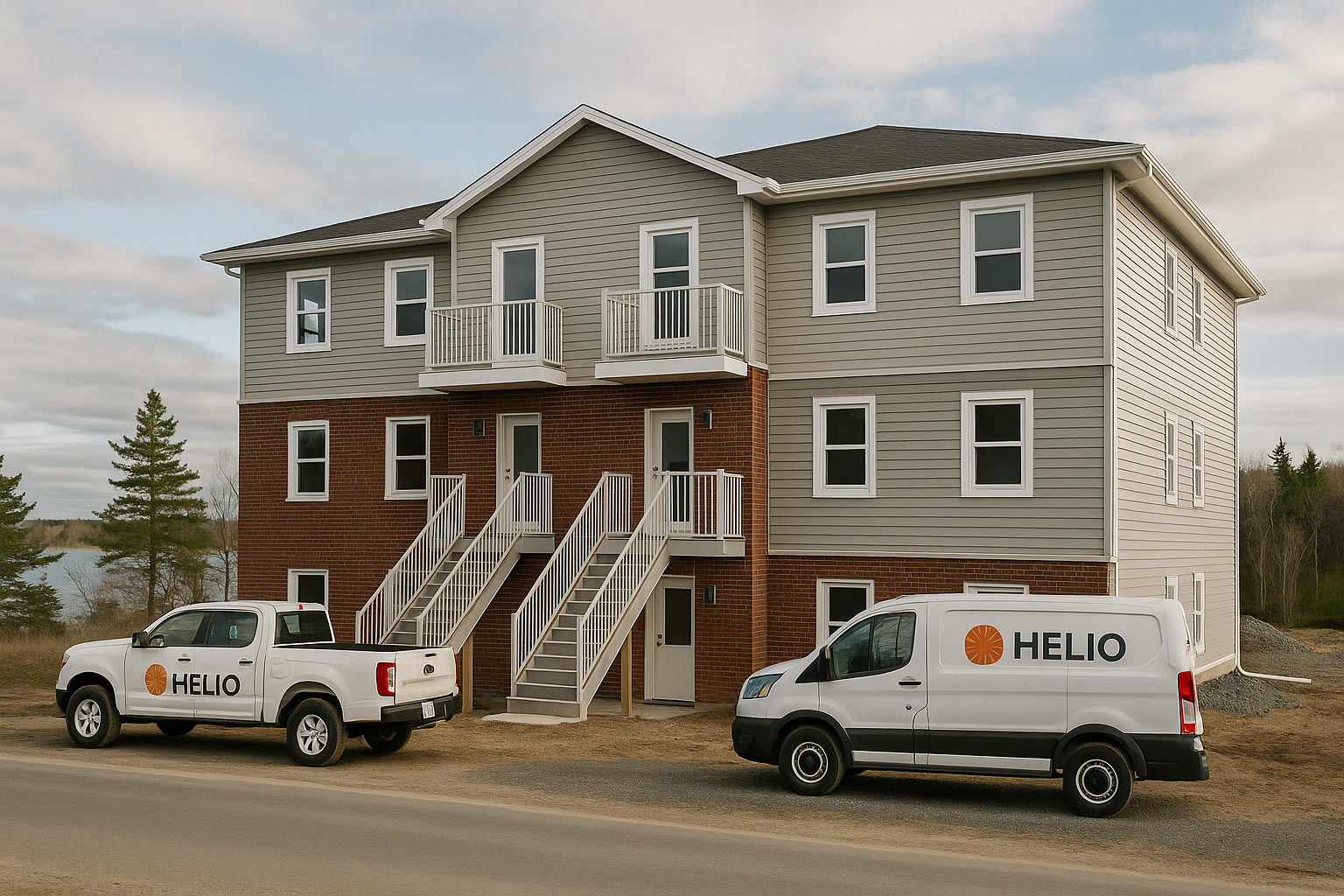
Permits for a 4‑Plex in Nova Scotia: The Complete Checklist with Fees and Lead Times
Building a 4‑plex in Nova Scotia requires navigating several permits, fees, and timelines. Missing steps or submitting incomplete applications can delay your project. Here's what you need to know:
- Key Permits: Zoning approval, building permits, utility connections, and inspections are mandatory. Rural properties may need septic system and driveway access permits.
- Costs: Permit fees range from $5,300 to $18,400, depending on location and project specifics.
- Timelines: Expect 8 to 12 weeks for approvals if documents are complete. Delays can occur with incomplete or conflicting submissions.
- Halifax Updates: Since January 2024, 4-plexes in serviced areas can be built without rezoning, simplifying the process.
To avoid delays, ensure your applications are accurate and aligned with local regulations. Working with a single, integrated team can streamline the process, reduce errors, and keep your project on track.
7. Introduction to Permitting, Planning, Licensing & Compliance -Customer Portal Permit Application
Required Permits Checklist
Here's a detailed checklist of permits you'll need to secure for your 4-plex project. Following the correct order is crucial to avoid unnecessary delays and costs.
Zoning and Development Approval
First, confirm that your property is zoned for a 4-plex and obtain municipal development approval. Zoning regulations dictate what you can build, where you can build it, and how it must be constructed. These rules cover everything from property use and building size to setbacks, parking, and density [1].
If you're building in Halifax, changes effective January 2024 make it easier to develop four-unit properties:
| Aspect | Previous Rules (Halifax, Before Jan 2024) | New Rules (Halifax, Starting Jan 2024) |
|---|---|---|
| Unit Capacity | Single detached dwelling only | Up to 4 units by-right (serviced areas); up to 8 in urban core |
| Rezoning Required | Yes, for 2+ units | No, for up to four units (by-right development) |
| Design Flexibility | Strict height, coverage, and setbacks | More flexible standards on height, lot coverage, and unit layout |
These updates mean you can now build a 4-plex in many Halifax areas without needing a rezoning process. However, you’ll still need development approval to confirm your project complies with municipal standards. Since rules can vary across Nova Scotia, it’s always a good idea to consult your local planning department.
Building Permit
Once you’ve secured development approval, the next step is applying for a building permit. This permit allows you to begin construction and typically requires detailed construction drawings, such as floor plans, elevations, structural details, and layouts for mechanical systems.
A building permit will only be issued once you meet all requirements under the Municipal Government Act and have obtained any related permits [2].
Utility Connection Permits
For urban properties, you’ll need separate permits for municipal water, sewer, and stormwater connections [4]. Contact your local municipality or utility provider to learn about application requirements and associated fees.
Septic System Approval (Rural Properties)
If your property is in a rural area without municipal sewer access, you’ll need on-site sewage disposal approval from Nova Scotia Environment [3][4]. Additionally, rural properties may require approval from Nova Scotia Transportation and Infrastructure Renewal (NSTIR) for driveway access on provincial roads [3][4].
Other Required Permits
For properties with driveways connecting to provincial highways or roads, you’ll need a driveway access permit. It’s best to contact NSTIR early in your planning process to understand the specific requirements. Depending on your location, additional permits may also be necessary, so check with your local municipality to ensure you’ve covered all bases.
The next section will break down permit fees and processing timelines.
Permit Costs and Processing Times
Understanding permit costs and processing times is crucial for managing your budget and scheduling your project. Fees and timelines can vary widely depending on the municipality, which can impact your start date. Here's a detailed breakdown of what to expect.
Permit Fees in 2025
Permit fees come in several categories, with municipal permits often making up the largest portion. For a 4-plex, building permit fees typically range from $2,000 to $8,000. In Halifax Regional Municipality, these fees are calculated based on construction value - around $12 per $1,000 of construction value, plus base fees.
Development approval fees differ across municipalities, ranging from $500 to $2,500. Smaller communities may charge flat rates, while larger areas like Halifax use tiered pricing based on the complexity of the project.
Utility connection permits also vary by location and provider. For municipal water and sewer connections, you can expect costs between $1,500 and $4,000 per connection in urban areas. Electrical service connections through Nova Scotia Power typically cost $800 to $2,500, depending on the service requirements and distance from existing infrastructure.
Provincial permits are another consideration. For rural properties, septic system approvals from Nova Scotia Environment cost between $300 and $600. Driveway access permits issued by Nova Scotia Transportation and Infrastructure Renewal range from $200 to $800, depending on road classification and access needs.
How Long Each Permit Takes
The time it takes to secure permits varies depending on the type and complexity of the application.
Development approvals can take anywhere from 2 to 6 weeks. In Halifax Regional Municipality, straightforward 4-plex applications are typically processed within 4 to 6 weeks, while smaller municipalities might complete reviews in 2 to 3 weeks. However, more complex cases requiring variances or extra studies could extend the timeline to 8 to 12 weeks.
Building permits usually take 3 to 6 weeks to process after submitting a complete application. Rural municipalities often handle applications faster than urban centres due to lower volumes. If your application is incomplete or requires revisions, expect an additional 2 to 4 weeks.
Utility connections involve coordination with multiple providers. Nova Scotia Power generally processes electrical service applications within 2 to 3 weeks, but scheduling the physical connection can add another 2 to 4 weeks. Municipal water and sewer approvals take about 3 to 5 weeks, with installation timelines depending on the availability of municipal crews or contractors.
Septic system approvals from Nova Scotia Environment are processed within 3 to 4 weeks for standard applications. However, site evaluations and soil testing, which are required before submitting the application, can add another 1 to 2 weeks to the overall timeline.
Complete Fee and Timeline Chart
Here’s a consolidated overview of the costs and timelines:
| Permit Type | Issuing Authority | Cost Range | Processing Time |
|---|---|---|---|
| Development Approval | Municipal Planning | $500 - $2,500 | 2 - 6 weeks |
| Building Permit | Municipal Building | $2,000 - $8,000 | 3 - 6 weeks |
| Electrical Service | Nova Scotia Power | $800 - $2,500 | 4 - 7 weeks total |
| Water/Sewer Connection | Municipal Utilities | $1,500 - $4,000 | 3 - 5 weeks |
| Septic System Approval | Nova Scotia Environment | $300 - $600 | 3 - 4 weeks |
| Driveway Access | Nova Scotia Transportation | $200 - $800 | 2 - 3 weeks |
Total estimated costs for permits on a 4-plex typically fall between $5,300 and $18,400. Urban properties with municipal services are generally on the lower end of the spectrum, while rural properties requiring septic systems and provincial road access permits tend to cost more.
To keep your project on track, plan for a total timeline of 8 to 12 weeks from application submission to permit approval. Submitting complete documentation from the start can help avoid delays. Many property owners find that working with experienced construction professionals familiar with local requirements can streamline the process and reduce the risk of costly resubmissions.
sbb-itb-16b8a48
Required Documents and Inspections
Inspections play a crucial role in ensuring your project adheres to all building standards. These checks are conducted at key stages of the construction process to verify compliance.
Documents Needed for Permit Applications
Before you begin, make sure you have all the required paperwork in order. This includes:
- Permit applications
- Approved plans
- Inspection checklists
- Compliance certificates
Having these documents ready will help streamline the inspection process at each milestone.
Construction Inspection Schedule
Inspections are scheduled at specific stages of construction to ensure everything is on track. These include:
- Foundation inspection: Conducted right after excavation and before pouring concrete.
- Framing inspection: Performed once the structural framework is completed.
- Rough-in inspections: These cover mechanical, electrical, and plumbing systems, and must be done before walls are sealed.
- Final inspection: Takes place after construction is finished to confirm the project meets approved plans and building codes.
If an inspection reveals any issues, make the necessary corrections quickly and schedule a re-inspection to maintain progress.
How to Avoid Permit Delays
Permit delays can throw off your 4-plex project timeline. Understanding the common reasons behind these delays and taking proactive steps can help keep your plans moving forward.
What Causes Permit Delays
One of the biggest culprits behind permit delays is incomplete applications. When architects, engineers, and construction teams operate independently, their lack of coordination can lead to conflicting plans or oversights in meeting local regulations. These issues often result in back-and-forth revisions, slowing down the approval process. To sidestep these problems, an integrated design-build approach is worth considering.
Why Integrated Design-Build Works Better
The integrated design-build model brings together planners, architects, engineers, and construction teams into a single, cohesive unit. This team handles everything - preparing plans, coordinating with municipal authorities, and submitting necessary documents. By addressing zoning, setbacks, and utility requirements right from the start, this approach ensures the process runs smoothly. With one team accountable for the entire project, the chances of delays are drastically reduced.
Traditional vs Integrated Construction Comparison
Here’s a look at how the integrated design-build approach stacks up against the traditional fragmented method:
| Aspect | Traditional Fragmented Approach | Integrated Design-Build |
|---|---|---|
| Coordination | Separate professionals often miscommunicate | A single team works together seamlessly |
| Timeline Certainty | Delays are common and unpredictable | 6-month completion guarantee with penalties for delays |
| Cost Control | Prone to budget overruns due to cost-plus pricing | Fixed pricing ensures clear, upfront costs |
| Permit Process | Multiple submissions and revisions slow approval | Comprehensive, compliant submissions speed up approvals |
| Accountability | Responsibility is divided among various parties | One point of contact ensures end-to-end accountability |
The traditional approach often leaves property owners juggling multiple contracts and managing conflicting advice, which can lead to frustrating delays. On the other hand, the integrated design-build method aligns all aspects of the project from the outset, making the process smoother, faster, and more predictable. This unified approach not only saves time but also reduces stress for everyone involved.
Getting Your 4‑Plex Permits Approved
Once you've got your checklist and fee schedule sorted, the next step is ensuring your permit applications are absolutely spot-on. Navigating Nova Scotia's permit process for a 4‑plex requires submitting complete and compliant applications right from the start.
The timeline for permit approval largely hinges on how well-coordinated your application materials are. When architectural, engineering, and construction plans align seamlessly, municipal reviews tend to move faster. On the flip side, inconsistencies in your application can lead to costly revisions and delays.
Preparation is key here. Submitting a well-organized, fully coordinated application to high-demand municipal departments - like those in Halifax - can make all the difference. This means addressing zoning compliance, setback rules, utility connections, and building code requirements before you even submit. Property owners who take this thorough approach often see their permits processed within standard timelines, avoiding unnecessary delays and financial risks.
One way to streamline the process is by working with a single, integrated team that handles your entire project. This team takes full responsibility for obtaining the necessary permits, ensuring that everything is aligned and ready to go. Contrast this with the traditional model, where architects, engineers, and contractors might work separately, leading to potential communication breakdowns and delays.
And those delays can be expensive - roughly CA$8,800 per month in lost rental income. By opting for an integrated design-build team that knows Nova Scotia's requirements inside and out, you can ensure your applications are submitted correctly and on time, helping to protect your income stream.
Partnering with an experienced, integrated team is an investment that pays off. It not only speeds up approvals but also provides predictable timelines and peace of mind, keeping your 4‑plex project on track and moving forward as planned.
FAQs
What are the advantages of using a design-build approach for permitting and constructing a 4-plex in Nova Scotia?
Using a design-build method for your 4-plex project in Nova Scotia can bring several practical benefits. This approach unites planning, design, and construction under a single team, creating one point of accountability and a smoother process from beginning to end.
One major perk is the potential for fixed pricing and a clear schedule, helping to minimise risks like delays or unexpected costs. By fostering direct communication between architects, engineers, and builders, it cuts out the inefficiencies often seen in more traditional construction methods. The result? Your project progresses with greater efficiency and fewer unexpected hurdles.
How do Halifax's new zoning rules impact the permit process for building a 4-plex?
Halifax has introduced zoning changes that now allow up to four units on a single serviced lot and as many as eight units in urban core areas. These updates remove the need for rezoning in many situations, enabling projects to move directly to the building permit stage.
This simplified approach cuts down on both time and red tape for property owners planning multi-unit residential developments, especially in serviced and urban zones. Make sure to check the specific zoning details for your lot to fully benefit from these changes.
How can I make sure my permit applications are complete and avoid approval delays when building a 4-plex in Nova Scotia?
To avoid delays and ensure your permit applications go smoothly, start by checking local zoning bylaws to confirm your project complies with municipal rules. If you're working on a rural property, keep in mind there may be extra considerations, such as septic systems or wells. Reaching out to municipal planners early on can help you navigate any specific requirements and avoid surprises.
Your plans should also align with building code standards for things like fire safety, accessibility, energy efficiency, and structural stability. Before submitting your application, gather all necessary documents, including detailed construction drawings, engineering reports, and property surveys. If you want to simplify the process and minimise mistakes, consider using pre-designed layouts or collaborating with an experienced design-build team.
For projects involving multi-unit buildings or major site changes, it's a good idea to apply for development permits as early as possible. Careful planning and thorough preparation will help ensure your project stays on schedule and meets local regulations.