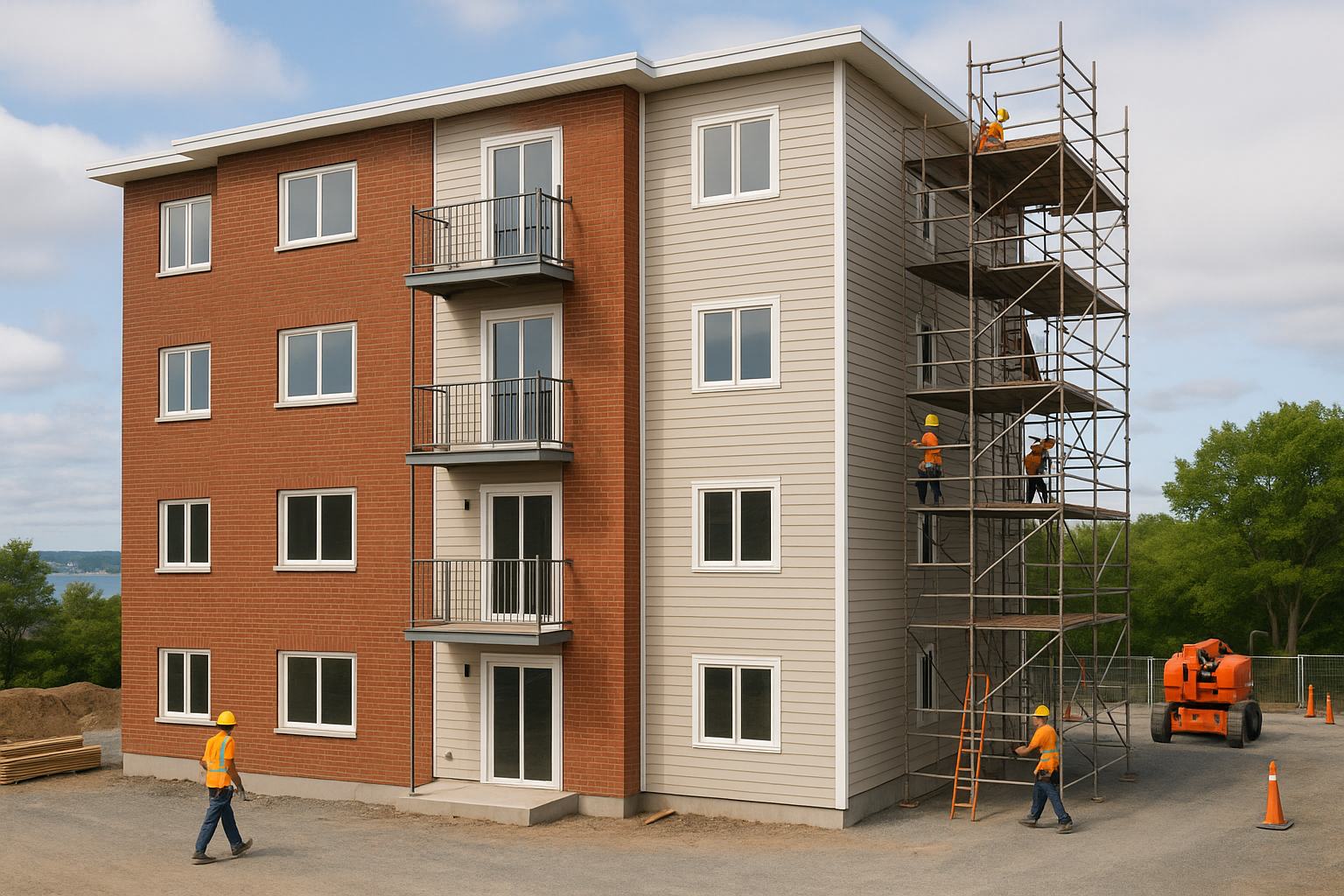
How Long Does It Take to Build a Small Apartment in Halifax? Permit to Occupancy
Building a small apartment (4–24 units) in Halifax typically takes 14–24 months from the first permit application to tenant move-in. The timeline depends on factors like construction methods, builder selection, and Halifax's regulatory requirements. Key phases include:
- Permits and Approvals: Often the most time-intensive step, especially if rezoning is required.
- Design and Planning: Overlaps with permitting; pre-approved designs can save time, while custom plans may take longer.
- Construction: Using integrated design-build methods can reduce time to as little as 6 months, compared to 8–18 months with separate contractors.
- Final Inspections and Occupancy: Includes municipal checks, utility hookups, and finishing touches.
Delays can arise from incomplete applications, weather, labour shortages, or material delays. Integrated builders, like Helio Urban Development, offer faster timelines, fixed pricing, and penalties for delays, helping projects finish on schedule and within budget. Choosing the right builder and method is critical to minimizing costs and maximizing rental income.
Halifax Development Timeline Breakdown
When planning a small apartment build in Halifax, understanding the different stages of the process is key to setting realistic expectations. Each phase comes with its own requirements and potential challenges that can affect your timeline.
Getting Your Permits
Securing permits is often the most time-consuming part of a project in Halifax. It starts with obtaining a development permit, followed by a building permit to confirm your construction plans meet local codes.
If your project is on pre-zoned land, the process may move a bit faster. However, delays can arise due to incomplete applications, utility coordination issues, or required consultations with neighbours. To avoid unnecessary setbacks, ensure your application is thorough and includes all required documentation. While permits are being processed, you can work on finalizing your design details.
Design and Pre-Construction Planning
This phase often overlaps with the permitting process. During this time, architectural drawings, engineering plans, and construction specifications are completed.
Using pre-approved building designs can save time, as these plans have already been vetted for similar projects, requiring fewer revisions. On the other hand, custom designs offer more flexibility to tailor the project to your site and market needs but may take longer to finalize. Halifax's diverse terrain can also call for additional engineering work, making detailed planning upfront even more critical.
Construction Timeline
Traditional construction in Halifax typically follows a step-by-step approach: laying the foundation, framing, installing mechanical and electrical systems, and finishing. Weather can be a significant factor, with colder or wetter seasons potentially slowing down tasks like exterior work and foundation pouring.
Alternatively, integrated construction approaches bring architects, engineers, and builders together from the outset. This method uses coordinated scheduling and pre-fabricated components to reduce delays. With these streamlined processes, construction timelines can be shortened considerably compared to traditional methods.
Final Inspections and Move-In Ready
After construction wraps up, the focus shifts to final inspections. Halifax municipal authorities conduct various checks, including building, fire safety, and electrical inspections, before granting an occupancy permit. Addressing any issues identified during these inspections promptly is crucial to avoid further delays.
Once the occupancy permit is issued, final steps like utility hookups, detailed cleaning, and installing appliances or smart home features ensure the property is tenant-ready. Integrated construction methods that bundle these finishing touches can make the transition to occupancy smoother and faster.
What Affects Your Project Timeline
Several factors can influence how long your project takes, even when you’ve carefully planned its phases. Let’s explore how permits, construction methods, and site-specific conditions can shape your timeline.
Halifax Permits and Regulations
The permitting process in Halifax can significantly impact how quickly your project moves forward. Approval times often hinge on things like the complexity of your project, the zoning of the land, and whether your documentation is complete. If your project is on land that’s already zoned for its intended use, approvals tend to be quicker. However, rezoning the land can introduce delays. Submitting thorough and accurate documentation can speed up the approval process and help you avoid unnecessary setbacks.
Comparing Construction Methods
The construction method you choose plays a huge role in your timeline. Traditional construction methods typically involve hiring separate contractors for different parts of the project. While this approach might seem straightforward, it often leads to coordination issues among various professionals, which can result in budget overruns and extended deadlines.
On the other hand, the integrated design-build approach offers a more streamlined process. This method brings planners, architects, engineers, and construction teams together under one contract. By eliminating miscommunication between separate parties, the design-build approach provides benefits like fixed pricing and guaranteed completion timelines - often within six months. Some integrated builders even include financial penalties for delays, ensuring accountability. Additionally, the use of prefabricated components and coordinated scheduling can further speed up the process.
Project Size and External Influences
The size of your project and external conditions can also have a big impact on how long construction takes. Smaller projects often stay on schedule with integrated methods, while traditional approaches are more prone to delays.
Site-specific factors, like soil quality and uneven terrain, may require additional engineering work or specialized techniques, adding time to the schedule. Material shortages or delays in procurement can also slow things down. And let’s not forget Atlantic Canada’s unpredictable weather - it can disrupt exterior work if not carefully planned. Labour availability is another key factor, as a shortage of skilled workers can stretch timelines further.
Halifax Small Apartment Build Examples
Real projects in Halifax show that taking a well-coordinated approach can lead to a six-month build, while traditional methods often stretch timelines and inflate budgets. These examples highlight how your choice of builder can directly affect both the schedule and overall costs.
Projects That Finished on Time
Helio Urban Development's 2025 Track Record
Helio Urban Development has consistently delivered projects within six months, from breaking ground to obtaining occupancy permits, by using an integrated design-build approach. This method has eliminated cost overruns and saved property owners an average of $47,000 in coordination-related expenses compared to traditional construction practices.
What Drives On-Time Success?
Timely project completion often hinges on early, coordinated planning. For example, streamlined utility coordination can prevent delays tied to unexpected service upgrades. Fixed-price contracts with guaranteed timelines also play a critical role, ensuring builders prioritize proper scheduling and maintain sufficient labour resources. The result? Property owners can start collecting rent as planned, with units producing competitive monthly rental income right from occupancy.
Common Problems and How to Avoid Them
While some projects meet their goals, others face substantial setbacks. Real-world examples highlight the challenges of traditional construction methods and why they often fail to deliver.
Why Traditional Construction Struggles
In Halifax, traditional construction methods frequently extend project timelines to anywhere from eight to 18 months. A key issue is the lack of coordination among independent contractors. Miscommunication between trades can snowball, turning what should have been a six-month project into a drawn-out process.
The Cost of Delays and Overruns
Traditional methods are notorious for cost overruns ranging from 30% to 60%. When problems arise, contractors often point fingers, leading to a cascade of change orders that further delay progress and inflate costs. The financial impact goes beyond construction expenses. For instance, a fourplex that could have generated $7,800 in monthly rent might lose up to $46,800 over a six-month delay - not including additional construction overruns.
Labour and Material Bottlenecks
Labour shortages are another common issue in traditional builds. Independent contractors managing their own teams often face scheduling conflicts, while material delays arise when supplies are ordered separately. These issues can worsen in Atlantic Canada, where unpredictable weather adds another layer of complexity.
How Integrated Methods Solve These Issues
Integrated construction methods address these problems by offering single-point accountability and a fully coordinated process. Builders using this approach provide financial guarantees and maintain control over the timeline, avoiding the coordination breakdowns that often plague traditional builds.
These examples highlight the importance of selecting the right construction method when choosing a builder. A coordinated approach can save both time and money while ensuring a smoother path to project completion.
sbb-itb-16b8a48
Picking the Right Builder for Your Halifax Project
Choosing the right builder can make or break your project's timeline and budget. Traditional construction methods can stretch timelines to 24–29 months, while newer integrated approaches aim to complete projects much faster. Understanding these methods is key to safeguarding your investment and ensuring everything stays on track.
Standard vs. Integrated Construction Methods
There are two main approaches in the construction world, and each has a big impact on how your project unfolds. Let’s compare them side by side:
| Aspect | Standard Construction | Integrated Design-Build |
|---|---|---|
| Responsibility | Separate contractors, architects, and engineers | One company handles everything - design, engineering, and construction |
| Pricing Structure | Cost-plus model; budgets often exceed by 30–60% | Fixed-price contracts with no surprises |
| Timeline Guarantees | No guarantees; projects often take 24–29 months | 6-month completion guaranteed, with penalties for delays |
| Risk Management | Homeowner shoulders coordination and delay risks | Builder takes full responsibility for risks |
| Communication | Multiple contacts across different trades | One dedicated contact throughout the project |
| Quality Control | Varies by contractor | Professional oversight and systematic checks ensure quality |
Traditional methods often leave property owners juggling multiple contractors, schedules, and standards, which can lead to delays and unexpected costs. On the other hand, integrated design-build approaches streamline the process by combining all responsibilities under one roof. For example, Helio Urban Development completes projects in just six months, offering fixed-price contracts at approximately $160,000 per unit - far quicker and more predictable than the industry standard.
Questions to Ask Your Builder
To ensure your builder aligns with your goals, it’s critical to ask the right questions. These will help you gauge whether they can deliver on both timelines and budgets.
Construction Method and Accountability
- "Do you provide an integrated design-build service that combines design, engineering, and construction under one contract?"
This ensures streamlined processes with a single point of accountability. - "Who will be my main contact throughout the project?"
A dedicated contact simplifies communication and accountability.
Timeline and Risk Management
- Ask how they handle delays, especially those related to municipal permits.
- Confirm whether they offer guaranteed timelines with penalties for delays.
Budget Protection
- "Do you offer a fixed-price contract? What costs, if any, fall outside this agreement?"
Fixed-price contracts protect you from the budget overruns common with traditional methods.
Quality and Communication
- "What quality control measures do you use, and how will I be updated on progress?"
Look for builders who provide regular updates, such as daily photos and professional inspections, rather than leaving quality to chance.
How Construction Delays Affect Your Money
Delays don’t just slow down construction - they directly impact your finances. Every extra month can eat into your cash flow and return on investment, making timeline guarantees essential, not optional.
Lost Rental Income
Imagine a fourplex where each unit rents for $1,950 per month. That’s $7,800 in total monthly income. A six-month delay would cost you $46,800 in lost rent. If the project stretches from six months to Halifax’s typical 24–29 months, the financial impact grows exponentially.
Higher Financing Costs
Delays also mean paying more interest on construction loans, especially with cost-plus contracts that often lead to budget overruns. Choosing an integrated builder with guaranteed timelines can help you avoid these pitfalls, allowing you to start earning rental income as planned.
Fixed-price contracts with guaranteed timelines give you financial clarity. You’ll know exactly when your rental income starts and how much the project will cost, which is invaluable when securing long-term financing. Lenders prefer projects with clear timelines and costs, making this approach even more attractive.
Builders who include financial penalties for delays - like Helio Urban Development’s $1,000-per-day penalty - show they’re serious about staying on schedule. This level of accountability aligns their priorities with yours, giving you peace of mind that your project will be completed as promised.
Conclusion: Planning Your Halifax Apartment Build for Success
Building a small apartment in Halifax doesn’t have to mean risking your budget or timeline. One of the most important decisions you’ll make is choosing the right construction method.
Halifax has recently streamlined its development approval process, cutting the average approval time from 20.8 months to 9.8 months - an impressive reduction of 11 months. This improvement now ranks Halifax 13th nationwide for the fastest approvals [1]. While this makes the municipal side of your project more predictable, the construction phase still hinges on the method and team you select.
Traditional construction methods often lead to extended timelines and cost overruns, with delays averaging 30–60%. For a typical fourplex, every extra month of delay can cost you approximately $7,800 in lost rental income.
On the other hand, integrated design-build approaches offer a more reliable alternative. These methods often deliver projects within six months, with fixed pricing and penalties for delays. This means you can start generating rental income sooner and see faster returns on your investment. Look for builders who offer guaranteed timelines, fixed-price contracts, and single-point accountability, along with daily updates and rigorous quality control.
Ultimately, your choice of builder plays a pivotal role in determining your project's success. While Halifax’s permitting process has become more efficient, selecting the right construction approach can help you avoid costly delays and keep your project on track.
FAQs
What are the benefits of choosing an integrated design-build approach for constructing small apartments in Halifax?
An integrated design-build approach streamlines the construction process by bringing design, permits, and building services under one roof. This eliminates the need to juggle multiple contractors, reducing the risk of delays and miscommunication. The result? Projects are often completed much quicker - sometimes in just six months - compared to the 12–18 months typically seen with traditional methods.
Another big advantage is financial clarity. Fixed-price contracts mean you can sidestep the surprise cost overruns that often come with cost-plus agreements. For property owners building small apartments in Halifax, this approach provides a smoother and more efficient experience from start to finish.
How does the permitting process in Halifax impact the timeline for building a small apartment, and what can property owners do to speed it up?
The permitting process in Halifax is a crucial factor in determining how quickly a small apartment can be built. While residential building permits are typically issued within 21 days, the entire permitting and approval phase can take anywhere from 4 to 8 months. The exact timeline depends on the project's details and its ability to comply with local regulations.
To help streamline this process, it's essential to ensure that all required documents are complete and adhere to ER3 zoning requirements. Halifax has made progress in cutting development approval times, with the average timeline dropping to 9.8 months in 2024 compared to 20.8 months in 2022. Being proactive, paying attention to detail, and collaborating with professionals who understand Halifax's permitting system can significantly reduce the risk of delays.
What challenges should property owners anticipate when building a small apartment in Halifax, and how can they be addressed?
Building a small apartment in Halifax comes with its fair share of hurdles, from navigating zoning regulations to ensuring utility access and picking the perfect spot. Getting your project in line with zoning rules is a must, as is securing access to water, sewer, and electricity. Plus, selecting a location close to workplaces, schools, or transit hubs can make the property more appealing to renters.
To tackle these challenges, start by consulting Halifax's local planning office early in the process. This will help you confirm zoning requirements and check on the availability of essential utilities. Targeting areas with low vacancy rates can also boost your investment's potential. Don’t forget to secure all necessary permits, like building and occupancy permits, to avoid delays and keep things running smoothly.