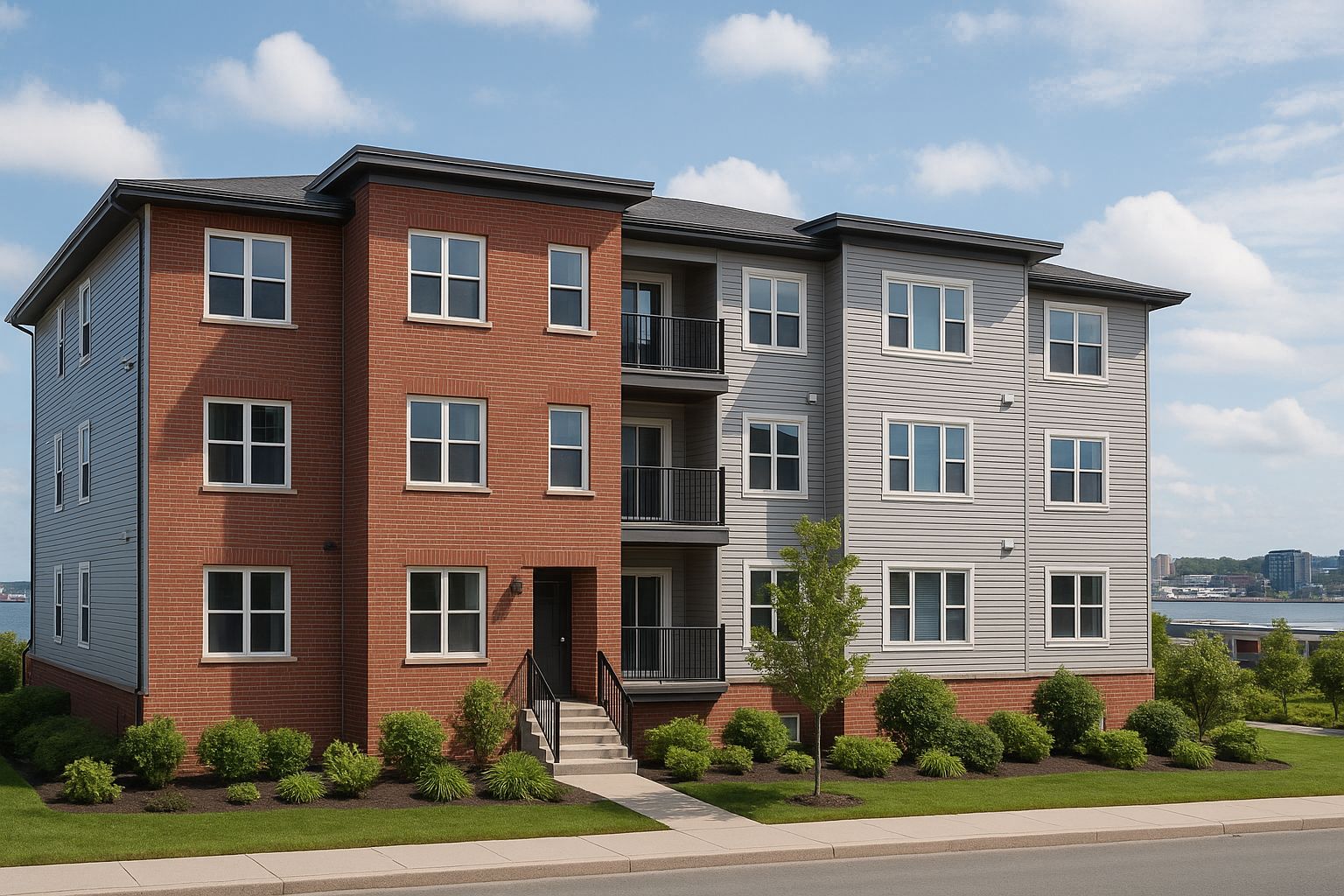
Best Unit Mixes for Small Apartments in Halifax: 4, 6, 8, and 12‑Unit Patterns
- 4-Unit Buildings: Ideal for first-time investors, with simple layouts and manageable construction costs. Focus on 2-bedroom units renting at $1,950–$2,100/month for steady cash flow and 12–20% ROI.
- 6-Unit Buildings: A middle-ground option offering better cost efficiency and higher income potential. Good for scaling up while maintaining moderate complexity.
- 8-Unit Buildings: Balances income growth with manageable challenges. Monthly rental income can reach $15,600–$16,800, with financing options like CMHC MLI Select available.
- 12-Unit Buildings: Best for experienced investors. Offers economies of scale and premium financing but involves higher regulatory and management demands. Monthly revenue can hit $23,400–$25,200.
Each option has specific trade-offs in terms of construction cost, revenue, and management effort. Smaller projects are easier to manage and fit into more locations, while larger developments provide higher returns but require more resources and expertise. Focus on 2-bedroom units, choose efficient construction methods, and align project size with your goals for success in Halifax’s rental market.
1. 4-Unit Buildings
Four-unit buildings are a practical starting point for entering the rental market while generating steady cash flow.
The ideal setup? Four identical 2-bedroom units. This layout maximizes rental income potential, with each unit currently renting for $1,950 to $2,100 per month in Halifax. Sticking to a uniform design also simplifies construction. By avoiding multiple floor plans, you cut down on design time, reduce material waste, and streamline the building process - making it both faster and more cost-effective.
Construction efficiency is especially critical for projects of this size. Fragmented construction plans can lead to costly overruns, which can derail the financial success of the project. For example, with a $640,000 construction budget, a 30% overrun could add $192,000 - erasing years of potential rental profits. Opting for integrated construction methods with fixed pricing can help avoid these pitfalls and keep the project on track.
From a financial standpoint, 4-unit buildings are particularly appealing for first-time investors. With monthly rental income ranging between $7,800 and $8,400, these properties typically generate enough to cover mortgage payments, property management fees, and maintenance costs. Annual returns often fall between 12% and 20%. Plus, leveraging programs like CMHC MLI Select, which offers 95% financing, can allow owners to achieve positive cash flow right from the start.
Delays can be a major headache for 4-unit projects, as extended timelines can significantly impact profitability. A project initially planned for six months could stretch to 12–18 months with traditional construction coordination. Integrated approaches that guarantee timelines not only reduce delays but also protect the overall project economics - making them a smart choice for property owners.
Another advantage of 4-unit buildings is their versatility in location. These properties fit seamlessly into various Halifax neighbourhoods, from well-established areas to up-and-coming districts. Their smaller scale allows them to blend into existing housing while still contributing to local business and transit support. This flexibility opens up more options for investors when choosing a location.
For new investors, 4-unit buildings also offer a valuable learning experience. Managing tenants, handling maintenance, and understanding local rental market trends are all skills that can be developed without the complexities of larger properties. This hands-on experience can be a stepping stone for expanding into larger multi-unit buildings in the future.
Finally, high-quality construction is key to long-term success. Features like ductless heat pumps, triple-pane windows, and engineered hardwood flooring not only attract reliable tenants but also justify premium rental rates. Investing in quality upfront pays off in tenant satisfaction and long-term property value.
2. 6‑Unit Buildings
Six-unit buildings offer a sweet spot for property owners, boosting rental income while keeping construction relatively straightforward. They strike a balance between the profitability of larger projects and the simplicity of smaller ones, making them an appealing option for investors.
A diverse mix of unit types is key to meeting tenant needs and maximizing rental income. For example, focusing on 2-bedroom units often aligns with local demand and delivers better rental returns. Compared to smaller projects, this setup generates higher revenue without adding too much complexity.
For CMHC MLI Select builds, construction costs can reach approximately $1,200,000, with financing available for up to 95% of the cost on a 50-year amortization. While the upfront investment is substantial, the long-term benefits include stronger cash flow and access to favourable financing terms.
However, managing the construction of a six-unit building can be challenging. Traditional methods often lead to delays and budget overruns, with what should be a six-month project stretching to 12–18 months if multiple contractors work independently. Integrated construction approaches can help avoid these pitfalls, saving around $47,000 in coordination costs. This approach mirrors the efficiency seen in smaller builds, ensuring better cost control.
Beyond construction, choosing the right location is crucial. Many areas in Halifax can accommodate six-unit buildings, but zoning laws and community acceptance - particularly in transitional neighbourhoods - must be carefully considered.
Tenant management also becomes more complex at this scale. While some owners may still manage the property themselves, hiring professional management services often becomes a practical choice. A well-planned mix of unit types can attract a diverse tenant base, reducing turnover and stabilizing income. Just like efficient construction, effective tenant management plays a vital role in maximizing returns.
Energy efficiency is another area where six-unit buildings shine. Features like ductless heat pumps and triple-pane windows help lower operating costs per unit while appealing to tenants in a competitive rental market. In a city like Halifax, with a low vacancy rate of around 1% [1], such features can command higher rents.
Financially, six-unit buildings deliver strong returns, with annual ROI typically ranging from 12% to 20%. Shared systems and bulk purchasing drive down per-unit costs, while the added rental income significantly boosts cash flow.
Timely project completion is critical to maintaining cash flow. Delays can eat into rental income, so working with construction companies that offer financial penalties for delays - up to $1,000 per day - provides valuable peace of mind for property owners looking to protect their investment.
3. 8-Unit Buildings
Building on the layouts of 4- and 6-unit projects, 8-unit buildings strike a balance between increased income potential and a manageable scale. They also avoid the regulatory hurdles that often come with larger apartment complexes.
From a cost perspective, this size is quite practical. Standard construction costs are about $160,000 per unit, adding up to approximately $1,280,000 for eight units. If you're opting for CMHC MLI Select builds, the cost rises to around $200,000 per unit, or $1,600,000 in total. With market rents ranging between $1,950 and $2,100 per unit, monthly rental income could fall between $15,600 and $16,800.
A straightforward layout focusing on two-bedroom units is particularly effective in Halifax. This configuration tends to keep occupancy rates high and rents steady, making it a reliable choice.
Traditional construction methods can lead to delays, which disrupt cash flow. On the other hand, integrated construction approaches not only streamline project timelines but also help maintain consistent cash flow throughout the process. This predictability is especially valuable for property owners.
In Halifax, zoning rules can sometimes require additional municipal approvals, depending on the neighbourhood. Engaging with local planning departments early in the process can make navigating these requirements much smoother.
Energy-efficient upgrades, like ductless heat pumps and triple-pane windows, are smart investments. They lower operating costs and attract tenants who prioritize environmentally friendly living. These features also align with broader cost-saving strategies discussed earlier.
While construction costs may be higher for energy-efficient builds, the increased rental income can help offset the expense. Additionally, shared building systems contribute to long-term profitability by reducing operational inefficiencies.
When it comes to financing, CMHC MLI Select offers appealing terms for 8-unit projects, making it a strong option for developers.
Timely project completion is critical to avoid losing rental income. Delays can cost property owners up to $15,600 per month in missed revenue. Integrated construction solutions with guarantees help safeguard against these costly overruns, ensuring projects stay on track.
sbb-itb-16b8a48
4. 12-Unit Buildings
When you reach 12 units, the dynamics of property development shift significantly. This size offers the benefit of economies of scale but also introduces more regulatory hurdles and a need for specialized management.
Construction costs for a 12-unit building typically range from $160,000 per unit for standard builds to $200,000 per unit if using CMHC MLI Select. That brings the total investment to $1,920,000–$2,400,000. With market rents between $1,950 and $2,100 per unit, monthly rental income can reach $23,400 to $25,200. These numbers highlight just how critical it is to stick to timelines; delays at this level can cost up to $23,400 per month, making construction guarantees a valuable safeguard for your cash flow.
Layout efficiency becomes even more important at this scale. In Halifax, the most successful 12-unit projects stick to a consistent two-bedroom layout. This uniformity simplifies construction, reduces costs, and ensures steady occupancy rates across all units.
Zoning challenges also start to play a bigger role. Many Halifax neighbourhoods impose stricter density rules and require additional municipal approvals for buildings of this size. Engaging with planning departments early can save both time and money by avoiding unexpected roadblocks during the approval process.
Energy efficiency upgrades make a noticeable impact when spread across 12 units. Features like ductless heat pumps and triple-pane windows not only cut operating costs but also appeal to tenants who value environmentally friendly living. These upgrades provide both immediate and long-term benefits.
On the financing side, CMHC MLI Select offers a significant advantage for projects of this scale. With 95% financing available, property owners can take on a $2,400,000 project with far less upfront capital - a game-changer for many developers.
Given the stakes, having a unified construction team is essential. Relying on multiple contractors often leads to delays and cost overruns, which can erode the economic viability of the project. A cohesive team helps keep timelines on track and cash flow stable.
Finally, managing a 12-unit building is more demanding than smaller projects. The administrative load - handling tenants, coordinating maintenance, and ensuring compliance with regulations - requires a higher level of organization and commitment. These challenges, along with the opportunities, make 12-unit buildings a distinct step up from smaller developments.
Advantages and Disadvantages by Unit Count
When deciding on the size of a development project, it's essential to weigh the trade-offs between construction costs, revenue potential, and management demands. Here's a breakdown of how different unit counts impact investment and profitability:
| Unit Count | Construction Cost | Monthly Revenue | Key Advantages | Main Disadvantages |
|---|---|---|---|---|
| 4 Units | $640,000–$800,000 | $7,800–$8,400 | Easier approvals, simpler financing, manageable scale | Higher per-unit costs, limited savings from bulk purchases |
| 6 Units | $960,000–$1,200,000 | $11,700–$12,600 | Better cost efficiency, moderate complexity | Limited scale advantages, zoning restrictions |
| 8 Units | $1,280,000–$1,600,000 | $15,600–$16,800 | Strong return potential, operational efficiencies | More regulations, higher financial stakes |
| 12 Units | $1,920,000–$2,400,000 | $23,400–$25,200 | Maximum savings from scale, access to premium financing | Lengthy approvals, complex management requirements |
Financial Risk and Reward Scaling
As the unit count increases, so does the balance between risk and reward. Larger projects, like a 12-unit development, are more vulnerable to construction delays, with monthly revenue losses significantly higher compared to smaller projects like 4-unit buildings. However, these larger developments often yield better per-unit returns due to operational efficiencies and financing options, such as the ability to secure up to 95% coverage through CMHC programs.
Regulatory Complexity
Smaller projects, particularly 4-unit buildings, face fewer regulatory hurdles in most Halifax neighbourhoods. As the unit count rises, so do the requirements for parking, density, and accessibility. These added layers of regulation can extend approval timelines and increase costs, especially for 12-unit projects.
Management Demands
The level of administrative effort grows disproportionately with scale. A 4-unit building involves straightforward tenant relations and basic maintenance. By contrast, an 8-unit property begins to offer operational efficiencies without becoming overly complex. At 12 units, the property essentially operates as a small apartment building, often necessitating professional management services.
Construction Efficiency
Larger developments benefit from economies of scale. For instance, 12-unit projects can take advantage of bulk material orders and dedicated construction teams, reducing per-unit costs. On the other hand, 4-unit buildings typically face higher rates for materials and services. Additionally, spreading fixed costs over more units in larger projects - especially with a consistent 6-month construction timeline - further enhances cost efficiency.
Market Positioning
The location of a development plays a major role in profitability. Smaller buildings, such as 4 or 6 units, offer greater flexibility in neighbourhood placement, making them suitable for areas where larger projects might face resistance. This flexibility can lead to lower land costs per unit. Meanwhile, 12-unit buildings thrive in high-density zones, where premium land prices are offset by higher rental income and demand from tenants seeking purpose-built rentals.
Ultimately, your decision should align with your financial resources, risk tolerance, and management capacity. Each project size offers unique opportunities and challenges, so understanding these dynamics is key to making an informed choice.
Conclusion
After reviewing the comparisons above, it's clear that choosing the right unit mix for your rental property in Halifax depends on your financial resources, risk tolerance, and management capabilities. Whether you're a first-time investor or a seasoned developer, aligning your project size with your goals is essential for success in this market.
Smaller projects, like 4-unit buildings, are perfect for those new to property ownership. They’re easier to manage and work well in established neighbourhoods, though they come with higher per-unit costs. Stepping up to 6-unit developments offers a middle ground, combining improved cost efficiency with moderate management complexity, making them a great choice for investors ready to scale up without diving into overly complex projects.
For those with more experience, 8-unit properties often strike the right balance. They provide operational efficiencies and solid returns while avoiding the steep regulatory hurdles of larger builds. On the other hand, 12-unit buildings are best suited for investors with significant capital and a solid management team. These projects unlock premium financing options, such as CMHC programs, but come with longer approval processes and more intricate management demands.
To protect your profits, it’s vital to avoid construction missteps that can drain your resources. Using integrated, fixed-price construction methods is one way to keep your timelines on track and safeguard your return on investment. This approach helps you maintain cash flow and avoid costly delays.
As you plan, think about your long-term objectives. For first-time builders, starting small with 4 or 6 units can provide valuable experience without overwhelming challenges. More experienced investors may find 8-unit buildings offer a strong balance of risk and reward. Those with the resources and expertise to handle larger projects can maximize their returns by focusing on 12-unit developments in high-demand locations.
No matter the size of your project, Halifax’s rental market rewards thoughtful planning and quality construction. Prioritizing 2-bedroom units, which typically rent for $1,950 to $2,100 per month, and choosing a streamlined construction strategy can set your project up for success. A well-executed plan ensures your investment is delivered on time and on budget, paving the way for a profitable venture.
FAQs
What are the benefits of using integrated construction methods for small apartment buildings in Halifax?
Integrated construction methods, such as the design-build approach, streamline the process of developing small apartment projects in Halifax. By merging design, engineering, and construction into one cohesive workflow, this method improves communication, minimizes delays, and boosts overall efficiency.
For property owners, this approach simplifies management by eliminating the need to juggle multiple contracts. With a single point of accountability, uncertainties are reduced, making the process much smoother. Additionally, it allows for smarter layout planning and better-managed construction timelines, helping meet Halifax's rental market needs while enhancing potential returns on investment.
How do energy-efficient features like ductless heat pumps and triple-pane windows benefit rental income and tenant satisfaction?
Energy-efficient upgrades like ductless heat pumps and triple-pane windows can make a big difference for rental properties. These features not only cut down on energy use but also lower utility bills - something tenants will appreciate as it helps them save money each month. Plus, energy-efficient units tend to be more comfortable, offering better temperature control and reducing noise, which can encourage tenants to stick around longer.
For property owners, these improvements can justify charging higher rents, as many renters are willing to pay more for eco-friendly and cost-saving living spaces. On top of that, local rebate programs or incentives might be available, adding even more value to the investment. In the end, energy-efficient upgrades benefit everyone - tenants enjoy the comfort and savings, and landlords see stronger returns over time.
What are the key regulatory challenges when building a 12-unit apartment in Halifax, and how can they be addressed?
Developing a 12-unit apartment in Halifax means working within the framework of Nova Scotia Building Code Regulations and the city's municipal zoning rules. These guidelines address key elements such as permits, design standards, and safety requirements. With the recent updates to Halifax's Established Residential (ER) Zones, there’s now more flexibility for higher-density housing, including multi-unit buildings.
To navigate these requirements smoothly, it's essential to stay up-to-date on both provincial and local regulations, obtain all the necessary permits, and ensure your project aligns with the Nova Scotia Building Code Act. Partnering with professionals experienced in Halifax's rental market can make the process more efficient and help you avoid unnecessary delays or setbacks.