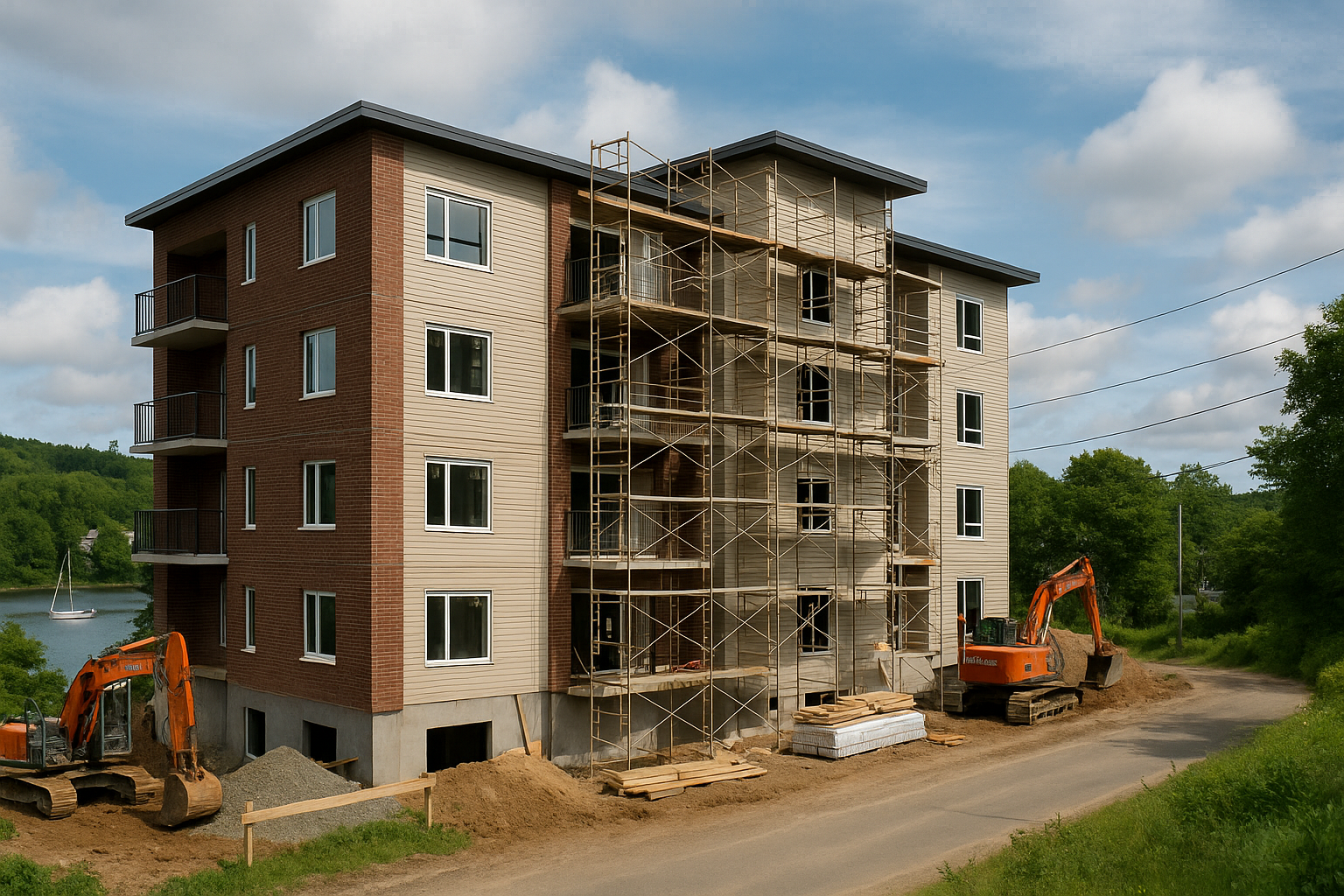
High Interest Rates, Low Construction? How the Economic Climate is Shaping Nova Scotia’s Home Builds
High interest rates are slowing down Nova Scotia’s rental housing construction. Rising borrowing costs are forcing property owners to delay or cancel projects, worsening the province’s housing shortage. Small multi-unit buildings, a potential solution, face financial hurdles due to higher financing costs, stricter lender requirements, and project delays. These challenges are driving up rental prices, particularly in high-demand areas like Halifax.
Key takeaways:
- Financing struggles: Higher interest rates and stricter lending criteria are limiting new rental construction.
- Project delays: Budget overruns and coordination issues are common, adding to costs.
- Rising rents: Fewer new units mean higher rental prices, with two-bedroom units in Halifax averaging $1,950–$2,100/month.
- Solutions: CMHC MLI Select offers 95% financing and 50-year amortization. Fixed-price contracts and integrated design-build models can reduce risks.
Despite challenges, Nova Scotia’s strong rental demand presents opportunities for property owners who can navigate the current economic climate effectively.
Halifax Real Estate: REAL Reason New Homes Are SO UNAFFORDABLE
How High Interest Rates Are Changing Construction
Recent rate hikes by the Bank of Canada have reshaped the financial landscape for small multi-unit construction projects. What used to be relatively straightforward investment decisions now demand a deeper level of scrutiny. Rising borrowing costs are driving this shift, forcing property owners to rethink their strategies. Here's a closer look at how higher borrowing costs, project delays, and market shortages are reshaping the construction industry.
Higher Borrowing Costs for Property Owners
The cost of financing construction projects has climbed significantly. Loans that once came with manageable interest rates now carry much steeper terms, leading to higher monthly payments. This makes it tougher for property owners to meet the stricter debt service requirements that lenders now enforce. Many financial projections that previously showed strong cash flow are now barely breaking even - or worse, forecasting losses - as borrowing costs continue to rise.
Fewer Construction Projects Getting Started
The ripple effects of tighter financing are evident in the slowdown of new multi-unit construction starts. Many property owners are shelving or outright cancelling their plans after discovering that pre-approved financing no longer holds up under the new lending criteria. Lenders are requiring updated appraisals and more detailed financial forecasts, often exposing projects as no longer feasible. This slowdown doesn’t just affect property owners - it trickles down to subcontractors, who face reduced workloads and delays, and to material suppliers, who are grappling with smaller order volumes and higher per-unit costs.
Supply Shortage Drives Up Rental Prices
The construction slowdown is creating a growing gap between rental supply and demand. With fewer new units entering the market, rental rates in areas like Nova Scotia - particularly in prime locations - are climbing. For property owners who can navigate the financing hurdles, this environment offers the potential for increased rental income. However, the risks are higher than ever. Projects plagued by cost overruns or delays can quickly become financial liabilities. To stay profitable in this high-interest-rate climate, securing stable construction costs and reliable timelines is more important than ever.
Main Problems Facing Small Multi-Unit Property Owners
Owning and managing small multi-unit properties comes with its own set of challenges. High interest rates and outdated construction practices often create significant roadblocks, making it difficult for property owners to maintain profitability and efficiency.
Financing Issues and Reduced Returns
Rising interest rates and stricter equity requirements are squeezing profit margins for owners of 4–24 unit properties. While construction expenses remain steady, the increase in financing costs can dramatically cut into expected returns. On top of that, construction delays add to the problem - lost rental income combined with ongoing interest payments can quickly eat away at profits.
Budget Overruns and Project Delays
Traditional construction methods are notorious for budget overruns, which can range from 30% to 60%. These overruns often occur because projects lack a unified team operating under a single contract. Even small design changes during construction can lead to hefty additional costs due to the need for new drawings, approvals, and rework.
Delays are another common issue. Subcontractors often juggle multiple projects, and supply chain disruptions remain a persistent problem. These delays not only push back completion dates but also increase financing costs and postpone rental income. For example, inefficiencies in coordinating a typical fourplex project can cost property owners an average of $47,000 in wasted resources.
Juggling Multiple Contractors and Professionals
Fragmented project management is another major headache for property owners. With six or more independent professionals involved in most projects, miscommunications and scheduling conflicts are almost inevitable. A common scenario? A contractor shows up ready to work, only to find that the preceding tasks aren’t finished, causing a chain reaction of delays and extra costs.
This disjointed process often forces property owners to step in as unpaid project managers, spending 10–15 hours a week coordinating contracts, insurance, and payment schedules. This time could be better spent focusing on their core business or pursuing new investment opportunities. Additionally, when quality control is divided among multiple parties, resolving warranty claims and disputes can become a drawn-out and frustrating ordeal long after the project is completed.
sbb-itb-16b8a48
Solutions to Reduce Construction Risks
Property owners don’t have to settle for the usual headaches that come with construction projects, especially in a high-interest-rate environment. By combining smart financing options with modern construction methods, many of the risks tied to small multi-unit builds can be minimized.
Using CMHC MLI Select Financing
The CMHC MLI Select program offers a financial lifeline for property owners looking to build more units without requiring significant upfront capital. Even with high interest rates, this program allows qualified applicants to secure 95% financing with just 5% down. On top of that, it offers a 50-year amortization, which can drastically reduce monthly carrying costs during and after construction.
For example, energy-efficient units, which typically cost around $200,000 (compared to the usual $160,000), can leverage financing at a 20:1 ratio. Helio simplifies the CMHC application process by handling much of the paperwork, making it easier for property owners to take advantage of this opportunity. This financing model not only eases the burden of construction costs but also reduces the risk of budget overruns.
Fixed-Price Construction Contracts
In times of tighter financing, having budget certainty is essential. Fixed-price construction contracts offer property owners peace of mind by locking in costs upfront. This eliminates the risk of unexpected expenses caused by fluctuating material prices, labour rates, or design changes.
By shifting the risk of cost overruns to the builder, fixed-price contracts ensure that projects stay on budget and on schedule. For property owners, this means predictable financial outcomes. For instance, knowing each unit will cost $160,000 allows for accurate planning of debt servicing and cash flow, making these contracts a crucial tool for managing construction risks.
Integrated Design-Build: One Company, One Contract
Traditional construction often involves juggling multiple contracts with architects, engineers, and contractors - all working independently. This fragmented setup can lead to miscommunication and inefficiencies, which studies suggest cost property owners an average of $47,000 per project in wasted resources.
The integrated design-build approach solves this problem by consolidating all professionals under a single contract. This creates one point of accountability, aligning everyone toward the same goals. With streamlined communication and faster decision-making, this method reduces delays and minimizes disputes, which can otherwise lead to costly mid-project changes.
Another advantage? Overlapping design and construction phases. Instead of waiting for one phase to finish before starting the next, tasks like site preparation and material procurement can happen simultaneously. This can cut the typical 12–18 month construction timeline down to as little as 6 months.
By simplifying communication, speeding up timelines, and ensuring unified accountability, the integrated design-build approach delivers a smoother construction experience.
These strategies give property owners the tools they need to navigate the challenges of building in a high-interest-rate environment with confidence and clarity.
Rental Market Opportunities Despite High Interest Rates
Even with high interest rates, rental demand in Nova Scotia continues to thrive. For property owners, this presents a chance to navigate economic challenges and tap into steady demand, potentially securing strong returns.
Nova Scotia Rental Market Data
The rental market in Nova Scotia remains tight, creating favourable conditions for property owners. In Halifax, average rents for two-bedroom units range from $1,950 to $2,100 per month, with similar rates observed in Dartmouth, Bedford, and Sackville. Smaller communities within a 90-minute drive of Halifax are also seeing high demand, as many workers look for more affordable housing options that don’t require sacrificing reasonable commute times. These trends showcase the importance of making strategic choices in property development.
Building for Higher Returns
Making thoughtful construction decisions can significantly boost rental income and minimize vacancy rates, even in the face of rising construction costs. For example, energy-efficient units not only attract higher rents but also lower operating costs for both property owners and tenants. A rental-ready approach - adding appliances, window coverings, and smart home features during construction - can streamline operations and enable owners to start collecting rent immediately. While this adds about $15,000 per unit, it eliminates the hassle of post-construction coordination.
High-quality finishes are another key factor in maximizing returns. Features like quartz countertops, engineered hardwood floors, and triple-pane windows appeal to tenants searching for premium living spaces. These upgrades often result in longer tenancies and reduced turnover costs. Properties within a 90-minute radius of Halifax enjoy a unique advantage, balancing urban affordability with growth opportunities in surrounding communities. By building efficiently, owners can secure immediate rental income and improve their long-term investment outlook.
Why Purpose-Built Rentals Still Make Sense
Even with higher financing costs, purpose-built rental properties remain a solid investment. They offer steady monthly cash flow, which can increase over time through regular rent adjustments. For instance, with construction costs averaging $160,000 per unit and rents between $1,950 and $2,100 per month, annual returns can range from 12% to 20%. Financing options like CMHC MLI Select, which provides up to 95% financing and 50-year amortization, can further improve these returns.
The current slowdown in new construction also benefits those who proceed with projects now. With fewer units entering the market, properties completed in the near future are likely to lease quickly and enjoy stronger rent growth. By using fixed-price contracts and integrated design-build models, property owners can mitigate risks and secure consistent returns, even in today’s challenging economic environment.
Conclusion: Building Smarter When Interest Rates Are High
High interest rates don’t have to derail your multi-unit projects in Nova Scotia. The secret lies in addressing three common hurdles: coordination headaches, budget overruns, and timeline delays.
Let’s start with financing. CMHC MLI Select offers up to 95% financing, which can immediately improve cash flow. Even with unit costs at $160,000, pairing strong rental demand with strategic financing can yield annual returns ranging from 12% to 20%. But financing alone isn’t enough - locking in costs is just as important.
Fixed-price contracts take the guesswork out of budgeting. By agreeing on a fixed price upfront, you can calculate your returns with confidence before construction begins. This makes high interest rates just another factor to plan around, not an insurmountable obstacle.
Efficient project execution is the final piece of the puzzle. An integrated design-build approach combines planning and construction into one seamless process, eliminating the need to juggle multiple contractors. Instead of the typical 12 to 18 months for fragmented projects, this streamlined model can deliver a finished building in as little as 6 months. That’s a big win when every extra month adds to financing costs.
Nova Scotia’s rental market remains strong, with demand outpacing new construction. Slower building activity means less competition, creating an opportunity for property owners. By combining smart financing, fixed pricing, and streamlined construction, you can successfully navigate high interest rates while taking advantage of the province’s thriving rental market.
FAQs
What strategies can property owners in Nova Scotia use to keep building rental properties despite high interest rates?
Property owners in Nova Scotia facing high interest rates have several strategies to consider for managing costs and securing financing. One option is CMHC-insured loans, which can lower borrowing costs by offering reduced interest rates, thanks to the decreased risk for lenders. Another helpful resource is the Nova Scotia Down Payment Assistance Program (DPAP), which provides interest-free loans to ease the burden of upfront expenses.
Keeping a strong credit score - ideally 680 or higher - can also open the door to more favourable loan terms. Additionally, opting for fixed-price construction contracts can help maintain financial control by keeping budgets predictable, even during periods of economic uncertainty.
What advantages does an integrated design-build approach offer for small multi-unit rental projects in Nova Scotia?
An integrated design-build approach offers several benefits for small multi-unit rental projects. By having both the design and construction handled by one team, communication becomes more seamless, helping to avoid delays and unexpected expenses. This setup also simplifies accountability, as there’s a single point of responsibility throughout the project, making it easier to address issues early on.
Another advantage is the close collaboration between designers and builders, which boosts both efficiency and quality control. For property owners in Nova Scotia, this approach is particularly helpful in tackling economic pressures, such as rising interest rates, while still addressing the increasing demand for rental housing.
How can the CMHC MLI Select program help rental property owners manage financial challenges caused by high interest rates?
The CMHC MLI Select program is designed to support rental property owners facing the pressures of high interest rates. It offers a range of flexible financing options, such as higher loan-to-value ratios, longer amortization periods, and lower debt coverage requirements.
These features help ease borrowing challenges, making it more manageable to fund multi-unit rental projects - even during tough economic times. For property owners in Nova Scotia, this program provides a practical way to tackle rising costs while addressing the increasing demand for rental housing.