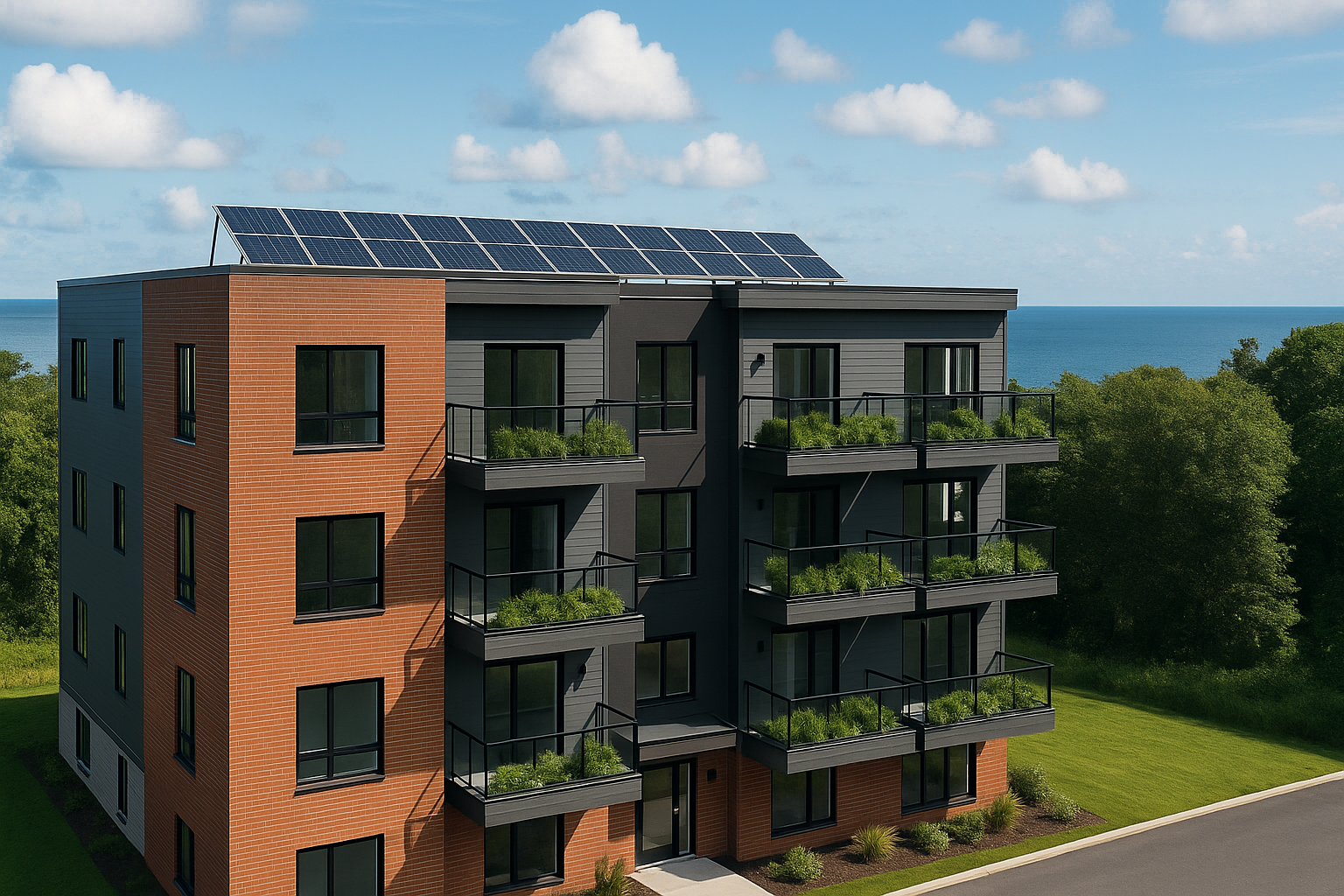
Building Green: Nova Scotia’s Push for Sustainable Homes and What’s Next
Nova Scotia faces two pressing challenges: a housing shortage and the need to meet its climate goals. The province is addressing these issues by focusing on energy-efficient, small multi-unit rental buildings. These properties, typically 4 to 24 units, offer a practical solution by balancing increased housing density with neighbourhood preservation. By using green construction methods, property owners can reduce costs, improve tenant satisfaction, and achieve strong financial returns.
Key points:
- Green construction saves money long-term: Features like triple-pane windows, heat pumps, and solar panels reduce energy use and maintenance costs.
- Faster project timelines: Integrated design-build methods cut construction times from 18 months to 6 months, with fixed costs averaging $160,000 per unit.
- Strong financial returns: Two-bedroom units rent for $1,950–$2,100/month, offering annual returns of 12–20%.
- Regulation and incentives: Stricter building codes and programs like rebates and financing options support energy-efficient construction.
- Future-ready designs: By 2030, all new buildings in Nova Scotia must meet net-zero energy-ready standards.
This approach not only helps meet housing demand but also aligns with Nova Scotia's climate goals, making it a smart investment for property owners.
Better Building Speaker Series: Sustainable Home Design Solutions with Don Roscoe
Nova Scotia's Green Building Rules and Incentive Programs
Navigating Nova Scotia's multi-unit housing projects means dealing with intricate regulations that can significantly influence both budgets and timelines. These evolving rules are just as impactful as construction techniques when it comes to project outcomes.
Building Code Updates for Green Housing
Nova Scotia's updated Building Code now includes stricter energy efficiency standards. These updates call for better insulation, high-performance windows, and advanced mechanical systems. While these features can increase initial costs, they offer substantial savings over time by reducing energy consumption. Future code revisions aim to support net-zero–ready construction, setting the stage for even more sustainable building practices.
Federal and Provincial Incentives for Green Construction
To help offset the higher costs of green construction, both federal and provincial programs offer financial support. These include favourable financing options and rebates. To make the most of these opportunities, review eligibility requirements and application deadlines early in the planning process. Working with builders who have experience navigating these programs can also simplify the application process.
HalifACT and Local Climate Goals
The Halifax Regional Municipality's HalifACT 2050 plan is pushing for substantial emission reductions and sustainable development. Although the plan is not legally binding, it heavily influences local policies and encourages environmentally friendly practices. Staying updated on these initiatives can help ensure your projects align with broader community goals for sustainability.
Understanding these regulations and incentives is key. Taking an integrated approach to construction not only ensures compliance but also helps avoid costly delays.
Green Construction Methods for Small Multi-Unit Properties
In Nova Scotia, property owners of smaller buildings, such as fourplexes and compact apartment complexes, can take specific steps to improve energy efficiency, enhance tenant comfort, and reduce operating costs. Even small adjustments in these types of properties can lead to noticeable savings and better overall performance. By carefully selecting materials and integrating efficient systems, these methods pave the way for long-term benefits.
Energy-Efficient Design and Materials
A smart design is the foundation of energy efficiency. For example, installing triple-pane windows helps reduce heat loss and improves insulation, which, while initially more expensive, pays off over time. Pair this with continuous exterior insulation and airtight construction, verified through blower door testing, to minimize air leakage and thermal bridging.
Material choices also play a big role in creating sustainable, durable spaces. Engineered hardwood flooring is a great alternative to traditional solid hardwood, offering both longevity and a more efficient use of wood resources. Similarly, quartz countertops provide a durable, low-maintenance, non-porous surface that stands up well over time.
Integrating Renewable Energy and Smart Systems
Renewable energy solutions, like solar panel installations, can be a game-changer. A well-planned system can power common areas and even supplement electricity for individual units.
Smart technologies further enhance efficiency. Smart thermostats adjust temperatures based on occupancy patterns, reducing energy use while allowing property owners to monitor settings remotely. Energy monitoring systems offer real-time performance data, helping to quickly spot inefficiencies or potential upgrades. For colder months, heat recovery ventilators reclaim warmth from outgoing air, making them particularly valuable in Nova Scotia’s chilly climate.
Water and HVAC Efficiency Upgrades
Upgrading HVAC systems is another key step. Modern heat pumps are designed to perform efficiently in cold climates, often outperforming traditional electric heating systems. Installing ductless heat pumps in individual units gives tenants control over their comfort while keeping the system design simple.
Water efficiency is just as important. Low-flow fixtures and on-demand hot water systems help conserve both water and energy. When designing HVAC systems, treating the building as a whole - by properly sizing equipment and incorporating zoned controls - ensures optimal energy use and extends the life of the equipment. These upgrades not only lower operational costs but also improve tenant satisfaction, which is crucial for maintaining a sustainable investment.
sbb-itb-16b8a48
Integrated Design-Build vs. Fragmented Construction: A Comparison
When it comes to building multi-unit rental properties in Nova Scotia, property owners face a crucial decision: should they work with fragmented contractors or opt for an integrated design-build team? This choice can drastically affect the project's cost, timeline, and overall success.
Problems with Fragmented Construction Approaches
The traditional construction model involves hiring separate professionals for each stage of the project - architects, engineers, general contractors, and various subcontractors. While this may seem straightforward, it often creates serious coordination headaches for property owners.
Without unified oversight, independent teams work on their own schedules, leading to delays and miscommunication. Accountability becomes a grey area, as no single party takes full responsibility for the project's overall success.
Cost overruns are another major issue. Estimates from independent contractors often fail to account for the interdependencies between trades, resulting in budget increases of 30–60%. These oversights lead to frequent change orders, which further inflate costs.
Delays are equally problematic. A project that should take about 8 months can stretch to 18 months or more, postponing rental income and frustrating owners. These challenges underscore the inefficiencies of fragmented construction.
The Benefits of Integrated Design-Build Models
Integrated design-build construction offers a streamlined alternative by bringing architects, engineers, planners, and construction teams together under one roof. This approach simplifies coordination while ensuring cost and timeline predictability.
With single-point accountability, the entire process - from design to final construction - is managed cohesively. Any issues that arise are addressed by one team, eliminating confusion over responsibility.
Fixed-price contracts are another advantage of this model. By locking in costs upfront, property owners avoid unexpected expenses and change orders.
Additionally, advanced scheduling and coordinated planning allow projects to move faster. When all team members work in sync from the start, delays caused by disjointed trades are avoided.
| Aspect | Fragmented Construction | Integrated Design-Build |
|---|---|---|
| Coordination | Multiple independent contractors | Single, unified team |
| Cost Overruns | 30–60% over budget | Fixed-price contracts with no surprises |
| Timeline Delays | 8-month projects often take 18+ months | Guaranteed completion in 6 months |
| Accountability | Shared among several parties | Clear, single-point accountability |
This integrated approach not only improves efficiency but also delivers tangible financial and timeline benefits.
Case Study: Fixed-Price Construction in Nova Scotia
Helio Urban Development is a prime example of how the integrated design-build model can deliver better outcomes for property owners. Currently managing 31 units under construction and planning 131 more, the company showcases the advantages of this unified method.
By combining design, engineering, and construction under one roof, Helio saves an average of $47,000 per project in coordination inefficiencies. Their projects have experienced zero cost overruns, and they guarantee completion within 6 months. To back this promise, Helio imposes financial penalties of up to $1,000 per day if deadlines are missed.
"I personally guarantee every timeline because I've felt the pain of construction delays", says Lloyd Liu, Helio's Co-Founder and CEO, reflecting on his own experiences with traditional construction challenges.
Helio's approach also includes daily photo updates, real-time access to a project portal, triple quality checks with inspections by professional engineers, and a 2-year warranty on all work. For developers working on 4- to 24-unit rental properties, this method delivers predictable results at $160,000 per unit. With target rents of $1,950–$2,100 per month, property owners can achieve an annual ROI of 12–20%. The model also aligns with Nova Scotia's green building goals, making it a reliable choice for sustainable multi-unit projects.
Long-Term ROI and Benefits of Green Multi-Unit Properties
Sustainable construction isn't just about environmental impact - it also delivers real financial advantages. For property owners, investing in green multi-unit buildings can lead to lower operating expenses, happier tenants, and stronger rental income.
Energy Savings and Tenant Retention
Energy-efficient features are no longer optional - they’re a must-have for today’s renters [1][2]. Green buildings consume up to 25% less energy compared to traditional properties, translating into noticeable utility savings. Features like advanced HVAC systems, LED lighting, and water-saving fixtures can cut operating costs by 14% to nearly 30%. Add in smart technologies like AI-driven HVAC systems and real-time occupancy monitoring, and energy use becomes even more efficient.
Modern touches, such as EV charging stations, also attract tenants by offering practical and desirable amenities. These features don’t just save money - they enhance comfort, encouraging tenants to stay longer and reducing turnover. This stability supports better occupancy rates and steady rental income, making green properties a smart long-term investment.
Maintenance and Durability of Green Buildings
Green construction prioritizes durability and quality. Materials like triple-pane windows, continuous exterior insulation, and engineered hardwood flooring are designed to stand the test of time, reducing the need for frequent repairs. Advanced HVAC systems and energy monitoring tools also allow for proactive maintenance, catching issues early and avoiding costly emergency fixes.
By lowering annual maintenance costs and minimizing disruptions for tenants, these features help maintain consistent rental income while preserving the property’s value.
Financial Impact on Rental Income and ROI
Sustainability isn’t just a selling point - it’s a revenue driver. Green buildings often command higher rental rates [3], with tenants willing to pay more for energy-efficient units equipped with modern amenities.
The growing trend of tenants seeking high-quality, sustainable living spaces ensures that green properties remain competitive in the market. Combined with reduced energy costs and consistently high occupancy rates, these factors contribute to strong annual returns. Plus, as Nova Scotia moves toward its net-zero goals, green construction positions your property to take advantage of future regulatory incentives and stay ahead of the curve.
What's Next: Future Trends in Nova Scotia's Green Housing Market
Nova Scotia's green housing market is undergoing rapid change, opening up new possibilities for property owners. The province's strong focus on sustainability is influencing policies, driving technological advancements, and introducing new construction methods that are transforming how multi-unit properties are designed and operated. Here's a closer look at how upcoming regulations and innovations are shaping the future.
Upcoming Policy Changes and Net-Zero Construction
Nova Scotia is tightening its construction standards to align with its sustainability goals. By 2028, all new buildings will need to be 50% more energy-efficient, with a target of net-zero energy-ready construction by 2030, in line with the National Building Code of Canada 2020 [6]. This shift is significant, as buildings currently account for 18% of Canada's total emissions, making them the third-largest emitting sector [4]. Most of these emissions - over 96% - stem from space and water heating, which heavily rely on fossil fuels [4].
To address this, the focus is on electrification and integrating renewable energy sources. While building a net-zero energy-ready property costs about 8% more upfront, the long-term benefits are clear. According to the Canada Green Building Council, these buildings can reduce annual operating costs by approximately 24% [6]. For property owners, this means balancing higher initial expenses with substantial savings over time, along with the added appeal of offering energy-efficient, environmentally friendly spaces.
New Technologies and Green Building Methods
Advancements in technology are making sustainable construction more practical and affordable. The Canada Green Buildings Strategy emphasizes electrification, low-carbon materials, and resilient designs as essential steps toward achieving net-zero emissions by 2050 [4]. Beyond operational emissions, attention is shifting to embodied carbon - emissions generated during the production and transportation of building materials [4]. This is driving demand for renewable, recycled, and low-carbon materials that minimize the environmental impact of construction itself.
Nova Scotia's goal of sourcing 80% of its electricity from renewable energy by 2030 [5] further supports the adoption of electric heating and cooling systems. These technologies not only reduce emissions but also position property owners to benefit from lower energy costs and increased tenant interest in sustainable living spaces.
Opportunities for Property Owners in Nova Scotia
For property owners, the current landscape offers a unique chance to get ahead of the curve. Government incentives for green construction are still available, and upcoming stricter building codes mean that features considered optional today will soon be mandatory. Acting now allows property owners to take advantage of these incentives while gaining a competitive edge by exceeding future efficiency standards.
This is especially true for those developing multi-unit rental properties. Sustainable features are increasingly in demand among tenants, and properties that meet or surpass new efficiency benchmarks can command premium rents, lower operating costs, and reduce exposure to regulatory risks. Early adopters can enjoy immediate benefits such as higher tenant attraction, reduced utility expenses, and long-term property value growth. By starting now, property owners can position themselves ahead of regulatory changes while reaping financial and environmental rewards.
FAQs
What financial advantages can property owners expect from building green multi-unit homes in Nova Scotia?
Investing in eco-friendly multi-unit buildings can be a financially rewarding move for property owners. These types of properties often boast reduced maintenance costs and increased property values, making them a savvy choice for long-term gains.
Take green-certified buildings, like those adhering to LEED standards, for instance. Studies show they can cut maintenance expenses by nearly 20% when compared to traditional buildings. On top of that, energy-efficient upgrades can slash operating costs by about 10% in the very first year. This not only saves money but also attracts tenants who prioritise environmentally friendly living.
By embracing sustainable practices, property owners can strengthen their financial position while boosting the appeal and durability of their rental units.
How are Nova Scotia's updated building codes and incentives helping to promote sustainable housing?
Nova Scotia plans to roll out the 2020 National Building Codes starting April 1, 2025, using a phased approach. These updated codes introduce a tiered system designed to steadily raise energy efficiency standards, ultimately steering the construction industry toward net-zero buildings.
The revisions place a strong emphasis on both accessibility and energy efficiency, promoting more sustainable practices in the construction of multi-unit rental properties. For property owners, this means not only staying compliant but also benefiting from long-term cost savings and increased tenant interest thanks to environmentally conscious building choices.
What are the benefits of choosing an integrated design-build approach for small multi-unit rental properties?
An integrated design-build approach brings the design and construction phases together under a single team. This setup leads to clearer communication, fewer delays, and a shared vision for the project. By doing so, it removes the need to juggle multiple contracts and minimizes the risk of miscommunication between designers and builders.
This streamlined process offers property owners more predictable timelines, controlled budgets, and consistent outcomes, especially when compared to traditional methods that often involve fragmented coordination and greater uncertainty. For small multi-unit projects, this approach simplifies the journey and ensures a more efficient path to completion.