What Can I Build on My Halifax ER‑3 Lot? Setbacks, Height, and Units Allowed
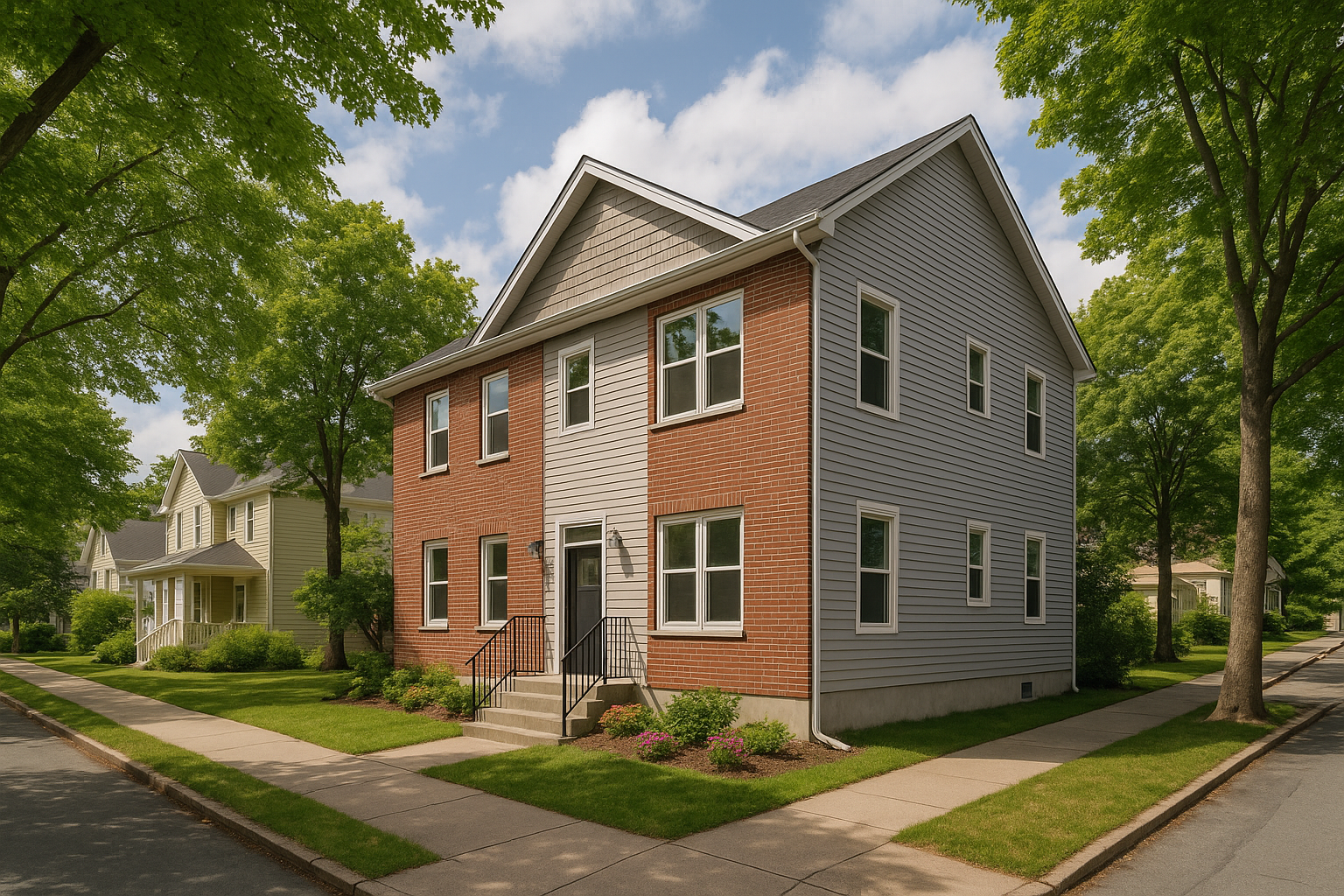
If you own a Halifax ER-3 lot, you can build duplexes, triplexes, fourplexes, small apartment buildings (5-8 units), or townhouses depending on your lot size and zoning rules. ER-3 zoning supports "missing middle" housing, allowing for higher density while maintaining neighbourhood character. Key factors include:
- Unit Limits: Determined by lot size, setbacks, parking, and density rules (e.g., Floor Area Ratio).
- Setbacks: Minimum distances from property boundaries to ensure privacy and emergency access.
- Height Limits: Vary by location and lot grade; sloped lots may have special considerations.
- Lot Coverage: Limits on how much of the property can be built on, ensuring space for parking and green areas.
- Heritage Restrictions: Additional rules may apply if your lot is in a heritage district.
For smoother construction, consider an integrated design-build approach to save time and avoid cost overruns. Companies like Helio Urban Development offer fixed pricing (e.g., $160,000 per unit) and quicker timelines, helping you maximize rental income with less hassle.
Halifax ER-3 Zoning Rules Explained
What ER-3 Zoning Allows
ER-3 zoning in Halifax focuses on "missing middle" housing, which fills the gap between single-family homes and large apartment buildings. The aim is to increase housing density while keeping the essence of established neighbourhoods intact.
What sets ER-3 zoning apart is its adaptability. You’re not restricted to a single building type, allowing you to tailor your project to your lot, budget, and market needs. This flexibility makes it a practical choice for developers looking to meet growing housing demand.
ER-3 zoning is prevalent in many established Halifax neighbourhoods, particularly within the Regional Centre Plan area. These include high-demand rental areas like the North End, South End, and parts of the peninsula, where multi-unit housing is increasingly sought after.
Let’s break down the types of buildings you can construct under ER-3 zoning.
Building Types You Can Construct
ER-3 zoning supports a variety of building types, offering different levels of investment and rental potential.
- Duplexes and triplexes: These are the easiest to finance and manage. They use straightforward construction techniques and blend well into typical residential neighbourhoods, making them a practical starting point for many developers.
- Fourplexes: With four rental units, these buildings strike a balance between income potential and maintaining a residential feel. While construction is slightly more complex, the additional rental income often justifies the effort.
- Small apartment buildings: Lots that are larger can accommodate buildings with 5-8 units. These projects require more advanced construction and professional management but offer higher rental income. The lot size and layout must meet specific requirements for these larger developments.
- Townhouse developments: Ideal for corner lots or larger properties, townhouses combine the appeal of private entrances with the density advantages of multi-unit housing. They’re a great option for developers looking to attract families or renters who value ground-level living.
These building options reflect the core goals of ER-3 zoning, which we’ll explore next.
ER-3 Zoning Objectives
The ER-3 zoning rules were designed with clear goals to address Halifax’s housing needs. At its core, the objective is gentle densification - adding more housing units without disrupting the character of existing neighbourhoods. Design standards ensure that new developments complement their surroundings while remaining viable for investors.
A key feature of ER-3 zoning is its encouragement of diverse housing forms. Streets in ER-3 zones might feature a mix of single-family homes, duplexes, and small apartment buildings, creating options for households of varying sizes and incomes. This intentional variety aligns with Halifax’s broader housing strategy.
Another important aspect is the emphasis on neighbourhood scale. While developments don’t need to mimic existing homes, they must respect the overall character of the area. This ensures that new projects fit seamlessly into their surroundings.
Many ER-3 zones are located near major transit routes, making them particularly appealing for renters who rely on public transportation. This focus on transit accessibility enhances the rental appeal of multi-unit developments.
Finally, the zoning prioritizes economic feasibility for property owners. By allowing enough density and flexibility, ER-3 zoning makes multi-unit projects financially attractive while maintaining reasonable development standards. This balance supports private investments that contribute to addressing Halifax’s housing challenges.
HALIFAX Home Owners May Have Just Won THE LOTTERY : Halifax Proposed Zoning Changes January 2024
How Many Units You Can Build
The number of units you can build on an ER-3 lot in Halifax depends largely on the size of your property. The city's zoning rules aim to balance neighbourhood character with opportunities for property owners to add rental units. These guidelines reflect Halifax's goal of maintaining harmony between development and community needs.
Unit Limits Based on Lot Size
In ER-3 zoning, the number of units allowed is tied to the total lot area. Smaller lots are typically approved for fewer units, while larger lots can accommodate more. Keep in mind that the lot area includes the entire property, but setbacks, parking spaces, and other site requirements will limit the space available for building. To get precise details, consult Halifax's current zoning regulations.
Secondary Suites and Their Impact
Secondary suites, whether they’re within the primary dwelling or in a separate backyard structure, count toward the overall unit limit for ER-3 lots. If you’re considering adding a secondary suite, plan for it from the start to ensure you stay within the allowed limits. These suites often have their own rules, such as setback requirements, height restrictions, and the need for independent access.
Bedroom and Density Restrictions
Halifax also enforces bedroom and density limits that can influence how many units you can build. These controls, including bedroom counts and Floor Area Ratio (FAR) requirements, may further restrict the number of units beyond what your lot size allows. To design your project effectively, review all applicable limits to find the best unit and bedroom configuration for your property.
Setbacks, Height Limits, and Lot Coverage Rules
Understanding the restrictions on your ER-3 lot is crucial for making the most of its potential while staying within Halifax's zoning regulations. These rules dictate where you can place your building, how tall it can be, and how much of the lot can be covered by structures.
Required Setback Distances
Setbacks are the minimum distances you must maintain between your building and the property boundaries. These rules help preserve the character of the neighbourhood, ensure privacy, and allow for emergency access. The exact setback requirements depend on factors like your lot size, nearby developments, and whether the area has heritage considerations. To avoid issues, it’s best to confirm the latest standards with Halifax's planning department.
Once you’ve accounted for setbacks, the next step is to understand the height restrictions for your building.
Maximum Building Height
The maximum height of a building is measured from the average grade around the lot to the highest point of the roof. If your building has a pitched roof, there may be allowances for additional height. On sloped lots, the average grade can change how these measurements apply, so it’s important to calculate carefully. Keep in mind how the height of your building might affect neighbouring properties, especially regarding shadows and privacy.
After height restrictions, lot coverage rules are another critical factor in shaping your project.
Lot Coverage Percentages
Lot coverage rules limit how much of your property can be occupied by structures, ensuring there’s room for green spaces, parking, and outdoor amenities. The percentage of coverage allowed depends on the total size of your lot and the zoning criteria for your area.
Typically, larger lots have stricter coverage limits, while smaller lots may allow higher percentages to make better use of the space. Lot coverage includes all above-ground structures, such as the main building, garages, and decks, but excludes basements. It’s essential to reserve enough open space for parking, landscaping, and recreational areas.
Successfully balancing setbacks, height limits, and lot coverage is essential for designing an ER-3 project that complies with Halifax's rules while making the most of your property’s potential as a rental investment.
sbb-itb-16b8a48
Additional Design and Zoning Requirements
Certain ER-3 lots in Halifax come with extra local guidelines that go beyond the usual setback and height rules. These added requirements are aimed at preserving the character and charm of the surrounding area.
Heritage District Restrictions
If your ER-3 property falls within a heritage conservation district, you'll face additional reviews to ensure any new construction aligns with the historical essence of the neighbourhood. On the Halifax side of the harbour, there are three heritage districts: Barrington Street, Schmidtville, and Old South Suburb. Plans are underway to merge Barrington Street and Old South Suburb into a new downtown district, which will also encompass the "capital" area, including Province House and Historic Properties [1].
"Heritage conservation districts allow flexible projects that benefit the area." - Coun. Sam Austin, Dartmouth Centre [1]
In these areas, designs must incorporate materials, architectural elements, and colour palettes that reflect the historical values of the district. To avoid complications, it's a good idea to consult Halifax's planning department early in the design process to ensure your plans meet all heritage requirements.
Construction Solutions for ER‑3 Projects
Building multi-unit rental properties on an ER‑3 lot often brings challenges with coordination, budgeting, and timelines. The traditional method of hiring separate architects, engineers, and contractors can result in miscommunication and delays. These hurdles highlight the need for a more efficient, integrated approach to construction.
Challenges with Traditional Construction Methods
Conventional construction methods can be a headache for property owners. Juggling multiple professionals - sometimes six or more - often leads to communication breakdowns between architects, engineers, contractors, and consultants.
Budget overruns are another frequent issue. When contractors provide independent quotes without aligning with the overall project needs, unexpected expenses can pile up. Timelines are also a common casualty. Projects that are initially scoped for eight months can drag on for 18 months or longer, straining cash flow and delaying rental income.
The Integrated Design‑Build Solution
Integrated design-build construction offers a way to avoid these pitfalls. This approach brings all professionals - planners, architects, engineers, and builders - under one roof. Instead of managing multiple contracts, property owners work with a single team that handles everything from initial planning to final construction.
This collaborative setup allows for fixed-price construction because the design and build teams work together from the start to outline project requirements. Coordination within the team also ensures construction timelines are shorter, with projects completed in as little as six months.
With one team managing both design and execution, quality control improves significantly. This reduces the risk of errors and miscommunication, which can lead to costly changes. Helio Urban Development is a strong example of how this method works in practice.
Case Study: Helio Urban Development
Helio Urban Development showcases the advantages of an integrated design-build approach for multi-unit rental properties in Nova Scotia. The company was founded to address the common challenges property owners face with traditional construction methods.
Helio offers fixed-price construction at $160,000 per unit, with a guaranteed six-month timeline. To back their commitment, they impose penalties of up to $1,000 per day if deadlines are missed. Their confidence in on-time delivery speaks volumes.
Currently, Helio has 31 units under construction across Nova Scotia, with plans for 131 more within a 90-minute radius of Halifax. Their integrated approach has eliminated budget overruns and saved property owners an average of $47,000 per project by cutting out inefficiencies.
Clients working with Helio typically achieve rental rates between $1,950 and $2,100 per month per unit. This translates to annual returns of 12–20% on ER‑3 properties. For those interested in CMHC MLI Select construction, Helio offers units at $200,000 each. This option qualifies property owners for 95% financing with a 50-year amortization period.
Helio also emphasizes quality assurance, conducting multiple Professional Engineer inspections during construction. Additionally, property owners have the option to choose their own final inspector, ensuring peace of mind throughout the process.
Planning Your ER‑3 Construction Project
Getting started on a multi-unit ER‑3 property requires quick and well-thought-out decisions. These early choices are crucial, as they can determine whether your project hits the 12–20% annual returns that successful ER‑3 developments often achieve.
Once you’ve defined your overall goals, the next step is to calculate your unit capacity and potential income. Begin by figuring out the maximum number of units your lot can support, based on its size and the density rules discussed earlier. For example, a typical ER‑3 lot can hold 4–6 units, but the specific dimensions of your property and setback requirements will ultimately decide the exact number. This calculation is key, as it directly affects your potential rental income.
Traditional approaches to development can be inefficient, often involving multiple parties and stretching timelines from 8 months to over 18 months. These delays can cost you up to $8,800 per month in lost rental income, making streamlined planning essential.
Your financing strategy is another critical factor. Explore options early, especially if you’re considering CMHC MLI Select-qualified projects, which allow up to 95% financing with extended amortization terms. While this approach requires higher upfront construction costs, the increased leverage often makes it a smart choice for those with limited initial capital.
When planning your timeline, account for both construction and rental preparation stages. Integrated design-build methods can significantly speed up the process, reducing construction time to as little as 6 months compared to the 12–18 months typical of traditional methods. Add 30–60 days for final inspections, occupancy permits, and tenant screening. Being ready for tenant move-ins right after completion can help you start generating income sooner.
Quality control is another area you can’t afford to overlook. Professional Engineer inspections at critical milestones can save you from costly fixes down the line. Opting for your own final inspector ensures that the building meets your standards before tenants move in. These steps safeguard your investment and align with the 2-year construction warranty that reputable builders usually offer.
Don’t forget to factor in location-specific considerations. If your property is within a 90-minute radius of Halifax, you’ll benefit from a stronger rental market and easier access to skilled construction teams. This proximity often leads to faster project completion and higher occupancy rates once your units are ready.
Finally, planning for rental readiness can make a big difference in your returns. Units equipped with Energy Star appliances, smart home features, and window blinds tend to attract tenants more quickly. Spending about $15,000 per unit on these upgrades can pay off within the first year by reducing vacancies and allowing you to charge higher rents.
FAQs
What should I know about building a multi-unit rental on an ER-3 lot in Halifax?
When working with an ER-3 zoned lot in Halifax, there are several important factors to keep in mind, especially regarding zoning regulations. These include setbacks, height restrictions, and the number of allowable units. ER-3 zoning allows for up to eight units - options like fourplexes or townhouses are common. For buildings with 1–4 units, the lot must have a minimum area of 325 square metres and a frontage of at least 10.7 metres. Structures can reach a height of 12 metres, which generally means up to three storeys.
Beyond these basics, you'll also need to consider design standards, parking provisions, and proper garbage storage to meet Halifax’s municipal requirements. Thoughtful planning is essential to make the most of your lot while adhering to the city's building codes.
What are the advantages of a design-build approach for property owners compared to traditional construction methods?
The design-build method streamlines the construction process by bringing both design and construction services under one roof. This approach gives property owners a single point of contact, making communication clearer and project coordination much smoother.
One big advantage of design-build is the faster timeline. Projects are usually completed in about six months, compared to the 12–18 months typical with traditional methods. On top of that, property owners get the benefit of a fixed-price contract right from the start. This means they know exactly what to expect financially, avoiding the budget surprises often seen with cost-plus models, where expenses can climb 30–60% higher than planned.
For those planning multi-unit rental developments, this integrated approach offers a more efficient process, better cost control, and fewer headaches along the way.
What restrictions should I consider when building in a heritage district with ER-3 zoning?
Building in a Heritage Conservation District (HCD) under ER-3 zoning involves more stringent regulations than standard ER-3 areas. These districts usually restrict development to a main dwelling and one secondary suite, even though typical ER-3 zoning might allow for additional units.
On top of that, HCDs impose rigorous design and compatibility standards to maintain the area's historic character. This often means longer approval processes and potentially higher costs for materials or design changes. If your property falls within an HCD, it's crucial to plan ahead and account for these specific limitations before starting your project.