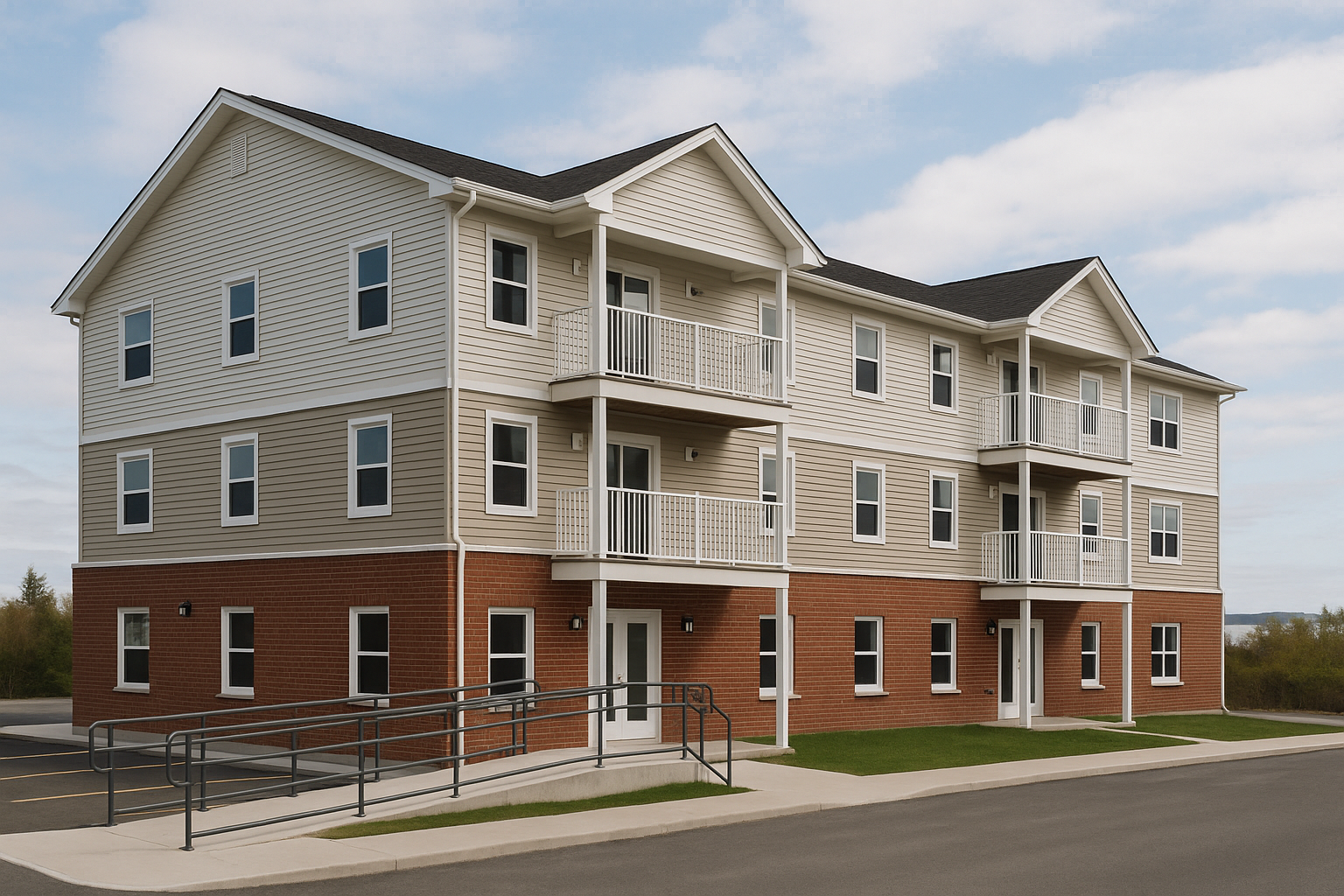
Accessible Rental Units: Meeting NS Accessibility Standards Without Blowing the Budget
Nova Scotia’s new accessibility regulations are here, and they’re non-negotiable for rental properties with 4–24 units. Starting April 1, 2026, all new multi-unit builds must comply with updated standards for parking, entrances, and internal layouts. Renovations also trigger compliance for modified areas.
The good news? You don’t have to overspend. Programs like forgivable loans (up to $24,000/unit) and energy efficiency rebates (up to 80%) can offset costs. Plus, integrating accessibility from the start avoids expensive retrofits later. Here’s what to know:
- External Requirements: Accessible parking, curb ramps, and sidewalks.
- Internal Requirements: Door widths, turning spaces, and barrier-free bathrooms.
- Funding Options: Provincial and federal grants, forgivable loans, and low-cost financing.
- Cost Control: Fixed-price contracts and design-build methods prevent budget overruns.
With Nova Scotia’s high disability rate (37.9%), accessible housing is in demand. Planning early ensures compliance, saves money, and meets tenant needs.
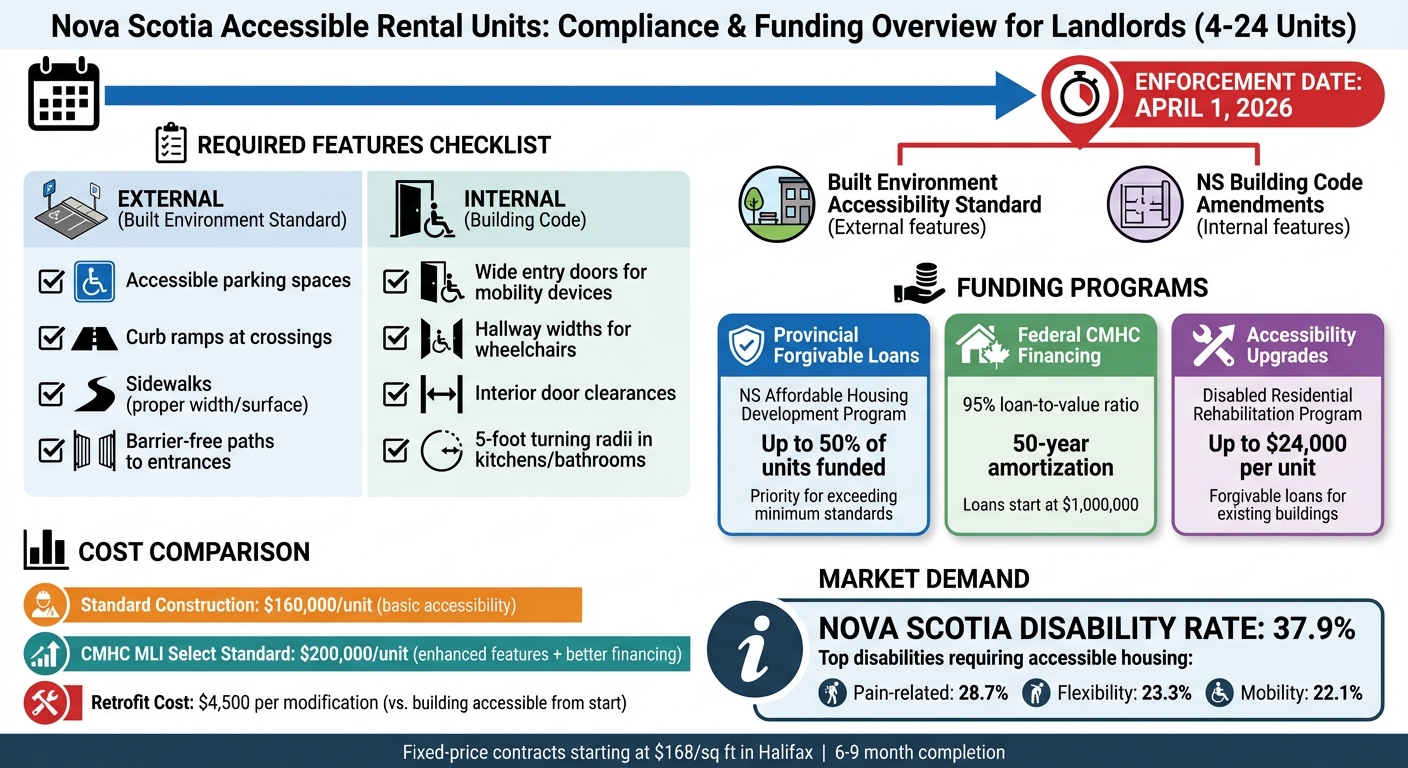
Nova Scotia Accessible Housing Requirements and Funding Options for 4-24 Unit Rentals
Multi-Family Housing Accessibility Training for Building Inspectors, Planners and Planning Boards
Nova Scotia Accessibility Standards for Rental Housing
Nova Scotia’s approach to accessibility in rental housing is built on two separate regulatory systems. The Built Environment Accessibility Standard Regulations came into effect on 6 March 2025, with enforcement starting on 1 April 2026 [3][5]. These regulations focus on external features like parking areas, sidewalks, and general site access, while internal features - such as door widths, turning spaces, bathroom layouts, and unit-specific accessibility elements - are managed through the Nova Scotia Building Code Regulations [3]. Amendments to the Building Code addressing these internal aspects also take effect on 1 April 2026 [7]. This dual framework ensures both external and internal accessibility needs are addressed in a structured way.
Required Accessibility Features for Multi-Unit Rentals
To meet accessibility requirements, landlords and developers need to address both external and internal standards:
- External features fall under the Built Environment Standard. This includes accessible parking spaces, curb ramps, sidewalks, and barrier-free building approaches.
- Internal features are governed by the Building Code. These cover hallway widths, door clearances, turning radii in kitchens and bathrooms, and other unit-specific requirements.
It’s important to understand this division because compliance is verified by different processes. Building Code requirements are reviewed during the permitting and inspection stages, while compliance with the Built Environment Standard may involve separate accessibility audits. Together, these systems aim to create fully accessible rental housing, but they are enforced independently. Next, it’s essential to understand how these standards apply differently to new builds versus renovations or retrofits.
How Standards Apply to New Builds, Renovations, and Retrofits
For new construction, full compliance with all technical design requirements begins on 1 April 2026 [3]. Every newly constructed aspect must meet these standards.
When it comes to renovations and retrofits, only the updated or redeveloped areas need to comply [3]. For instance:
- If more than 50% of a parking area is resurfaced or parking spaces are reconfigured, those areas must meet current accessibility standards [3].
- If a section of sidewalk is replaced, any adjacent curb ramps must also comply with the latest requirements [3].
This targeted approach ensures that while minor maintenance doesn’t trigger widespread upgrades, substantial renovations do require compliance with the accessibility standards.
Accessibility Checklist for 4–24 Unit Buildings
To ensure compliance with Nova Scotia’s regulations, here’s a checklist covering both external and internal features:
External Features (Built Environment Standard):
- Accessible parking spaces with proper dimensions and clear signage
- Curb ramps at pedestrian crossings that meet standards
- Sidewalks with the required width and surface specifications
- Barrier-free paths connecting parking areas to building entrances
Internal Features (Building Code):
- Entry doors wide enough for mobility devices
- Hallways with sufficient width for wheelchair access
- Interior door clearances that meet accessibility standards
- Kitchens and bathrooms with 5-foot turning radii
These measurements are critical. As of 5 June 2024, Nova Scotia’s MLS listings require sellers to include accessibility details like entry door widths, number of steps, threshold heights, and features such as safety bars or elevators [6]. This requirement highlights how accessibility is becoming a standard consideration across the province’s housing market.
Planning Accessible Rental Units from the Start
Incorporating accessibility right from the design stage can save you money and prevent expensive retrofits later. This is especially important in Nova Scotia's rental market, where accessibility is becoming a key consideration.
Assessing Accessibility Needs Before Design
Starting with universal design principles ensures rental spaces cater to everyone - whether it's parents with strollers, seniors using mobility aids, or individuals recovering from injuries. Key elements to focus on include accessible entrances, parking spaces, pathways, and interior layouts that can adapt to various needs. These features address the most common disabilities in Nova Scotia, including pain-related (28.7%), flexibility (23.3%), and mobility (22.1%) disabilities [1]. Wider doorways, step-free entries, and accessible bathrooms are not just thoughtful additions - they’re essential.
Using accessibility checklists or consulting professional accessibility inspectors during the planning phase can help identify critical features before construction begins. Addressing compliance issues on paper is far cheaper than making changes mid-construction.
How Integrated Design-Build Reduces Costs and Errors
Traditional construction often involves separate teams - architects, engineers, and builders working independently - which can lead to miscommunication and costly errors. An integrated design-build approach solves this by bringing everyone together under one team. This ensures accessibility features are planned and executed seamlessly from the start.
With this approach, property owners can track progress in real time through daily updates, while the unified team works under a fixed-price agreement. This shared accountability helps avoid unexpected expenses and keeps the project on budget. By eliminating surprises, the integrated process makes it easier to plan costs accurately.
Setting a Budget for Accessibility Features
A well-coordinated design strategy is the foundation for creating an effective budget. Smart planning, combined with funding programs, can make accessibility more affordable. For example, the Nova Scotia Affordable Housing Development Program offers forgivable loans for up to 50% of units in new builds - provided they meet accessibility standards [8][9]. At the federal level, CMHC MLI Select provides 95% financing and a 50-year amortization period for projects that meet higher accessibility and energy efficiency criteria [9].
For context, standard construction costs about $160,000 per unit and includes basic accessibility features. Upgrading to meet CMHC MLI Select standards costs around $200,000 per unit but adds enhanced features and unlocks better financing terms, improving cash flow from the start. Additionally, Halifax Regional Municipality recently secured $80 million from the federal Housing Accelerator Fund to fast-track 2,600 housing units over three years by streamlining approvals [9].
Fixed-price contracts, often part of an integrated design-build process, further protect your budget by locking in costs upfront. This ensures property owners have a clear picture of expenses before construction begins.
Affordable Design Solutions for Accessible Rental Units
Making rental units accessible doesn’t have to break the bank. Smart planning and design choices can achieve accessibility standards while keeping costs in check. The key? Incorporating accessibility from the very beginning of a project instead of making adjustments later. Retrofitting an existing space can cost around $4,500 per modification[11], but by using universal design principles during construction, these expenses can be avoided altogether[15]. This approach aligns with the integrated design-build method, ensuring accessibility is both practical and cost-efficient from the start.
Site Access and Building Entry
Creating accessible entryways begins with thoughtful site planning. Gently sloping paths paired with landscaping can replace steep ramps, offering a smoother and more visually appealing solution. For these paths, materials like wood or concrete work best, as grass, cobblestone, or brick can hinder mobility[14]. Accessible parking spots should connect to the entrance via the shortest and easiest route possible[12].
Zero-step entrances make buildings more inclusive, and swapping traditional round doorknobs for lever handles makes doors easier to operate for everyone[10][14]. To widen doorways without major structural changes, specialized hinges can allow doors to swing clear of the frame[14]. Safety and visibility can be improved with motion-sensing lights, which typically cost between $200 and $600 to install[11].
Common Areas and Unit Layouts
Inside the building, the layout should go beyond mere compliance to create genuinely functional and convenient spaces. Multi-bedroom units with accessible features can include wide, clear pathways throughout, kitchens with enough turning space, and work surfaces designed for ease of use[17]. Standardizing wider doorways and ensuring clear floor space for wheelchairs helps make these features a norm, not an exception.
For doorways, pocket, barn, or sliding doors are excellent alternatives to traditional swing doors. These options use wall- or ceiling-mounted tracks, reducing tripping hazards and saving space[13]. Lighting design also plays a big role - maximizing natural light and layering artificial lighting with dimmers or motion-activated options ensures spaces are well-lit without causing glare[13]. These thoughtful choices benefit everyone, from parents with strollers to seniors using mobility aids.
Budget-Friendly Materials and Fixtures
The materials and fixtures you choose can significantly impact both accessibility and costs. Barrier-free paths, tactile indicators, and exterior stairs should use firm, stable, and slip-resistant surfaces for durability and safety[16][3]. Tactile indicators should also have a high-contrast colour difference - at least 70% compared to surrounding surfaces - to assist those with low vision[16][3]. For stairs, slip-resistant finishes and contrasting markings on the leading edge of each step enhance safety[16][3].
Fixtures like faucets, switches, and door handles should be operable with one hand, without requiring tight grasping or twisting of the wrist[16][3]. Paddle-style faucet controls and lever handles meet these criteria while remaining affordable and easy to find[10]. Outdoor eating areas can also be made accessible by using stable ground surfaces that prevent mobility device wheels from sinking[16][3].
sbb-itb-16b8a48
Financing and Incentives for Accessible Construction
In Nova Scotia, creating accessible rental units is financially achievable thanks to a variety of federal and provincial programs. These initiatives provide essential support for integrating accessibility into construction budgets.
CMHC Apartment Construction Loan Program for Accessibility and Energy Efficiency
The CMHC Apartment Construction Loan Program offers low-cost financing options for rental projects in Nova Scotia. Loans start at $1,000,000 and can cover up to 100% of the residential component’s cost[18]. This program is particularly beneficial for property owners planning buildings with 4–24 units, as it rewards projects that prioritize energy efficiency and accessibility. By incorporating accessibility into the design phase, you can qualify for more favourable loan terms while meeting provincial accessibility standards.
Government Grants and Funding Programs
Nova Scotia provides several funding options aimed at promoting accessible housing. The Nova Scotia Affordable Housing Development Program offers forgivable loans for new construction or conversions. Projects that exceed the minimum accessibility requirements outlined in the Building Code are given priority[19].
- For smaller projects with fewer than 10 rental units, funding can cover up to 100% of the units.
- For larger projects, support is available for up to 50% of the units[19].
The amount of funding depends on factors like the affordability period, rent levels (set at least 20% below market rates), and project outcomes such as improved accessibility and energy efficiency[19]. These provincial funds can be combined with federal CMHC programs to maximize financial support.
For property owners looking to upgrade existing buildings, the Disabled Residential Rehabilitation Assistance Program for Landlords provides forgivable loans of up to $24,000 per unit for accessibility upgrades[1]. Additionally, the Community Housing Infrastructure and Repair Program offers forgivable loans for capital repairs, including accessibility improvements[20]. Property owners should also explore the ACCESS-Ability Grant Programs promoted by the Nova Scotia Accessibility Directorate for further funding opportunities[5].
Fixed-Price Contracts to Prevent Budget Overruns
To maintain control over project costs, fixed-price contracts are a reliable strategy. These contracts, starting at approximately $168 per square foot in Halifax, include accessibility features in the upfront pricing[9].
"Budget certainty is essential - fixed-price contracts shift cost risk from owners to builders."
Fixed-price agreements lock in total project costs from the outset, eliminating unexpected expenses during construction[9]. When accessibility and energy efficiency features are integrated into the initial design, they are factored into the agreed-upon price. This approach ensures transparency, with costs often broken down per square foot, making it easier for property owners and stakeholders to plan effectively. Additionally, projects using this model typically finish in 6–9 months, significantly faster than the standard 12–18 months[9]. This method ensures that accessibility and energy efficiency are seamlessly incorporated without risking budget overruns.
Verifying Compliance and Maintaining Accessibility
Pre-Occupancy Compliance Checklist
Before tenants move in, conduct a thorough pre-occupancy inspection to ensure all Building Code requirements for accessible housing are fully met. This includes verifying door clearances, bathroom accessibility, accessible routes, door hardware, and signage compliance with the Built Environment Standards. Proper documentation of this inspection is essential to maintain accountability and track compliance.
Documentation and Quality Verification
After confirming compliance, keep detailed records to protect your investment. This includes everything from approved design drawings and inspection reports to product documentation for accessible routes, unit features, and shared spaces [21][2]. If any changes or adaptations were made during construction, ensure these are documented as well. For properties with government funding, retain all relevant paperwork, such as operating agreements, pre-approval documents, quotes, and records of completed work [21][1][4]. This meticulous documentation process not only safeguards your property but also simplifies future inspections or tenant inquiries regarding accessibility features.
Ongoing Maintenance and Accessibility Reviews
Compliance doesn’t stop once the building is occupied. Regular reviews are key to maintaining accessibility in the long term. Plan for yearly internal reviews of your accessibility plan, and conduct more comprehensive assessments every three years to stay aligned with the Nova Scotia Accessibility Act [2]. Public sector agencies are required to follow similar annual and triennial review schedules to identify and address any barriers. Establish clear maintenance protocols for accessibility features, such as parking areas, snow removal, and emergency evacuation systems [3][2]. Also, have procedures in place to ensure accessibility is preserved during temporary disruptions, like construction or severe weather. These proactive measures help keep your property compliant throughout the year and avoid costly retrofits down the line [2].
Conclusion
In Nova Scotia, incorporating accessibility features into rental unit designs from the very beginning can save property owners from costly retrofits down the road. Planning with accessibility in mind ensures compliance with regulations - such as those coming into effect in March 2025 and the technical requirements starting in April 2026 - without unnecessary expenses[1][16][3]. This proactive approach aligns with the integrated design-build method discussed earlier, streamlining the process and keeping costs under control.
There’s also a strong financial argument for accessible housing. Nova Scotia faces a growing demand for accessible units, and programs like the Disabled Residential Rehabilitation Assistance Program for Landlords offer forgivable loans of up to $24,000 per unit[1]. Additionally, financing options with up to 95% loan-to-value ratios and extended amortization periods make it easier for property owners to invest in accessible housing. These incentives not only expand the tenant pool but also work seamlessly with fixed-price contracts, which lock in costs and reduce the risk of budget overruns often seen in fragmented construction projects.
The Crosswoods project in Cole Harbour serves as a prime example. Completed in July 2025, this 18-unit development - including nine affordable units - was made fully accessible from the outset. With $1.4 million from the Affordable Housing Development Program and $3.1 million from Canada’s National Housing Strategy Initiative, the project avoided the steep costs associated with retrofitting. This demonstrates how thoughtful planning and strategic funding can lead to both compliance and cost efficiency.
Accessible rental units not only promote inclusivity but also enhance long-term property value. By integrating accessibility into early design stages, leveraging cost-effective construction strategies, and taking advantage of available financing, property owners can meet Nova Scotia’s standards while staying on budget and delivering greater value to their tenants.
FAQs
What accessibility features are required for rental units in Nova Scotia, and how can property owners meet them?
To meet Nova Scotia's accessibility standards, rental units must incorporate several essential features. These include doorways with a minimum width of 900 mm, low or no-step entry thresholds (not exceeding 13 mm in height), and reinforced bathroom walls designed to support the installation of grab bars in the future. Kitchens and bathrooms also need to offer enough turning space - typically a diameter of at least 1,500 mm - to accommodate mobility aids.
Other important features include lever-style faucets, accessible controls (such as light switches and door handles) placed between 400 mm and 1,200 mm from the floor, and door passageways that meet the minimum width requirement of 900 mm. These elements not only ensure compliance with provincial regulations but also create a more functional and inclusive living space. By implementing these standards, property owners can enhance tenant satisfaction while potentially increasing the value of their rental properties.
What are some affordable ways to finance accessibility upgrades for rental properties in Nova Scotia?
Property owners in Nova Scotia have access to several government programs designed to help fund accessibility upgrades while keeping costs manageable. One such option is the Accessible Housing Program, which provides grants of up to $18,000 and loans of up to $20,000 to assist with modification expenses. Additional funding sources include the Disabled Residential Rehabilitation Assistance Program and Access-A-Home, both aimed at reducing the financial burden of these upgrades.
These initiatives are a practical way to make necessary improvements without exceeding your budget. They also ensure your rental properties comply with accessibility standards. Take the time to review the eligibility criteria and application steps to make the most of these financial supports.
What are the advantages of using a design-build approach for creating accessible rental units?
A design-build approach streamlines the creation of accessible rental units by bringing design and construction together under one team. This setup ensures effective communication, one-point accountability, and a structured workflow, which helps cut down on delays and unexpected expenses.
By incorporating accessibility planning right from the beginning, this method allows you to meet Nova Scotia's accessibility standards more efficiently while keeping costs in check. Plus, it removes the hassle of juggling multiple contracts, saving you time and simplifying the entire process. The end result? A welcoming, accessible space that serves your tenants' needs and enhances the value of your investment.